Stocked Parts
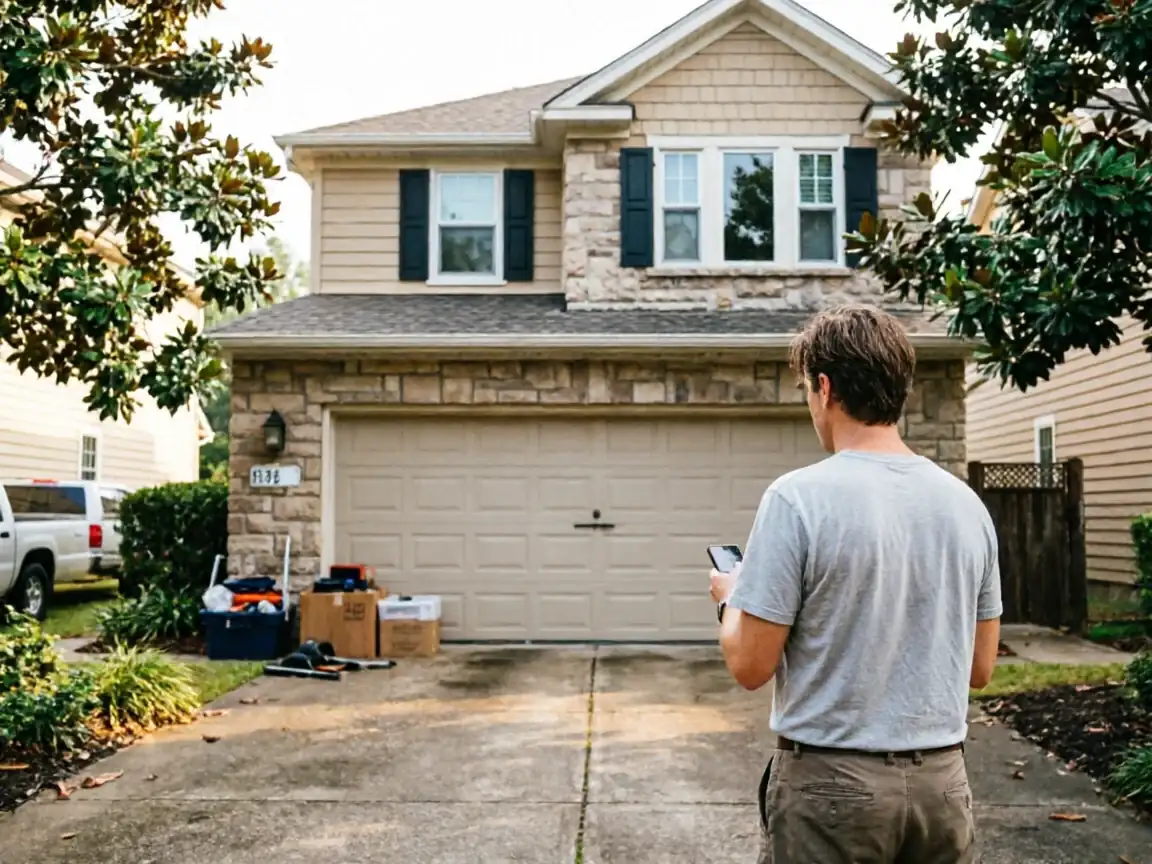
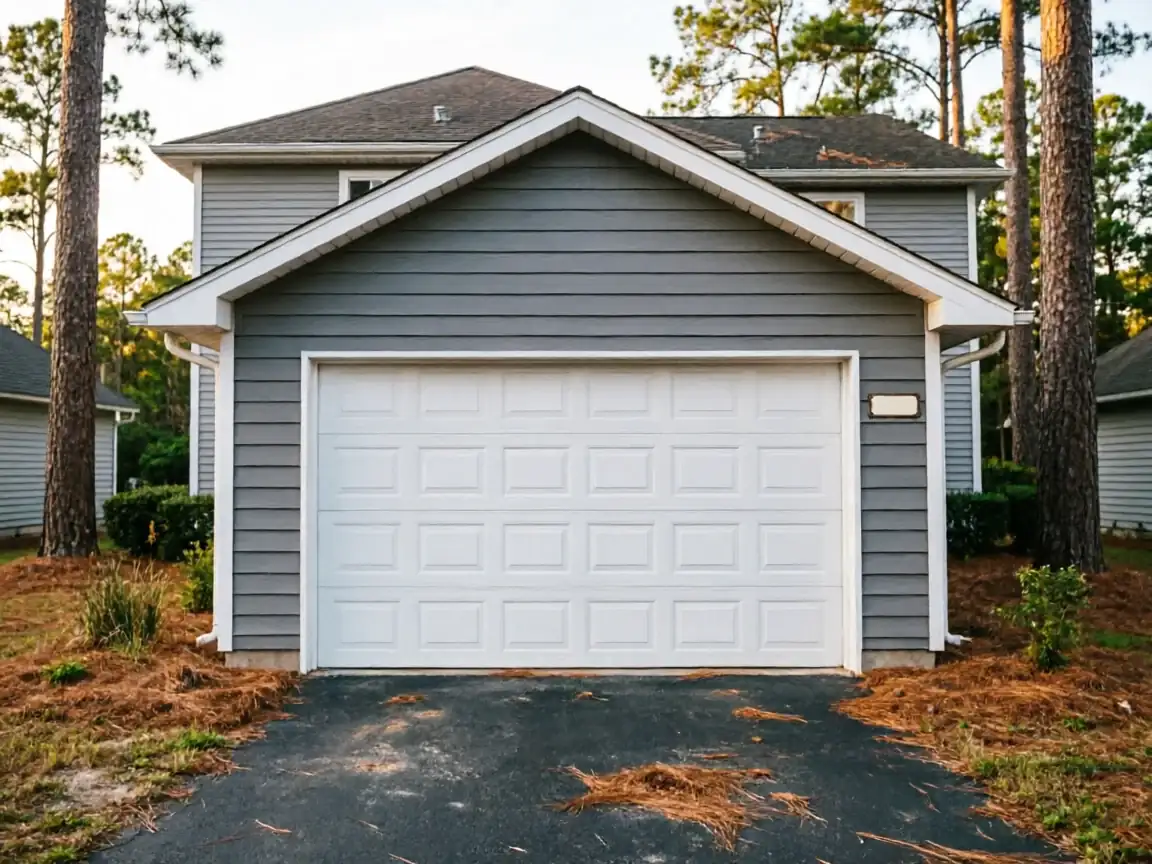
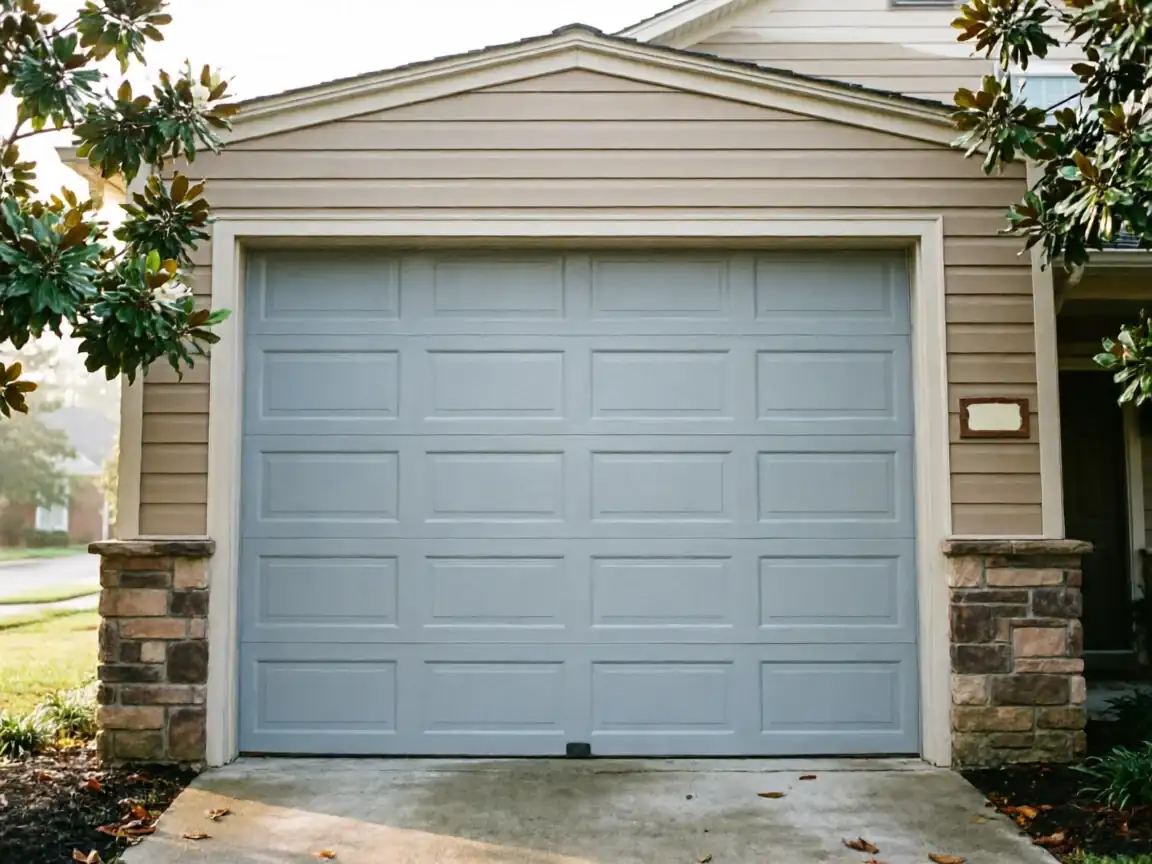
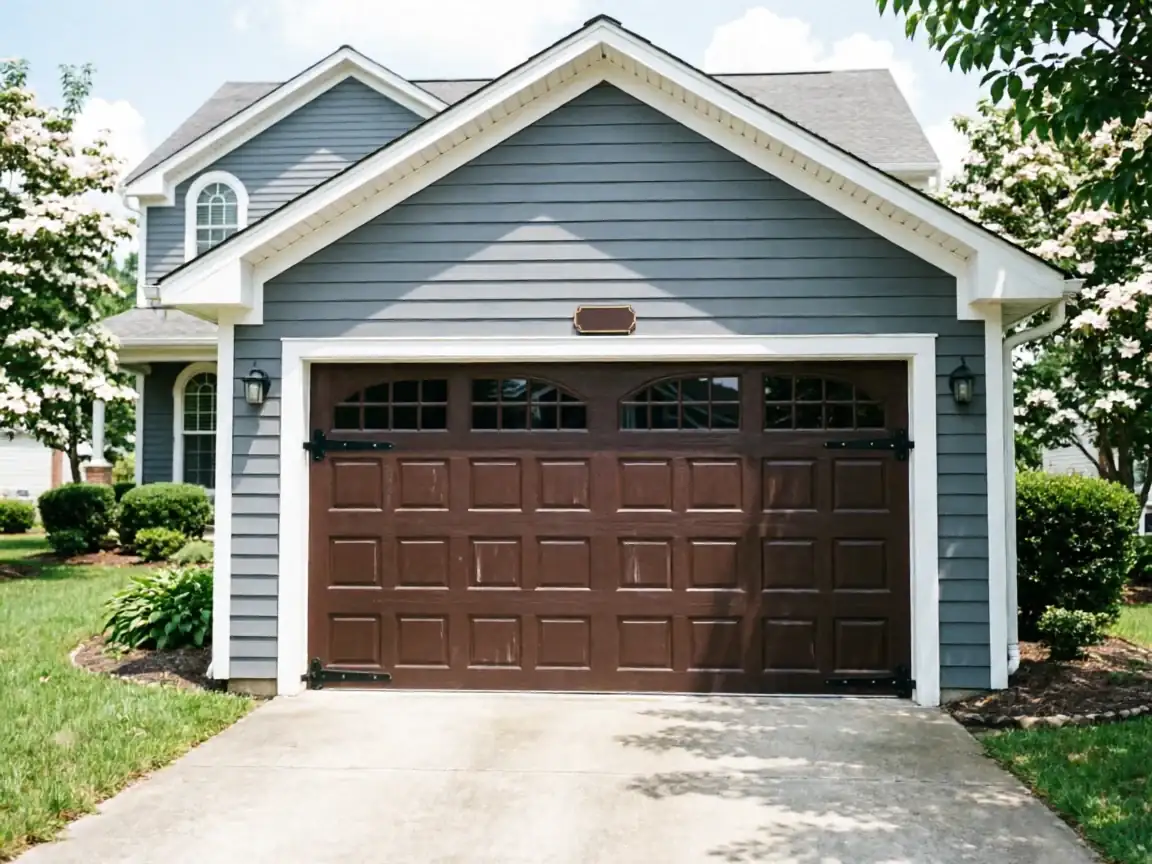
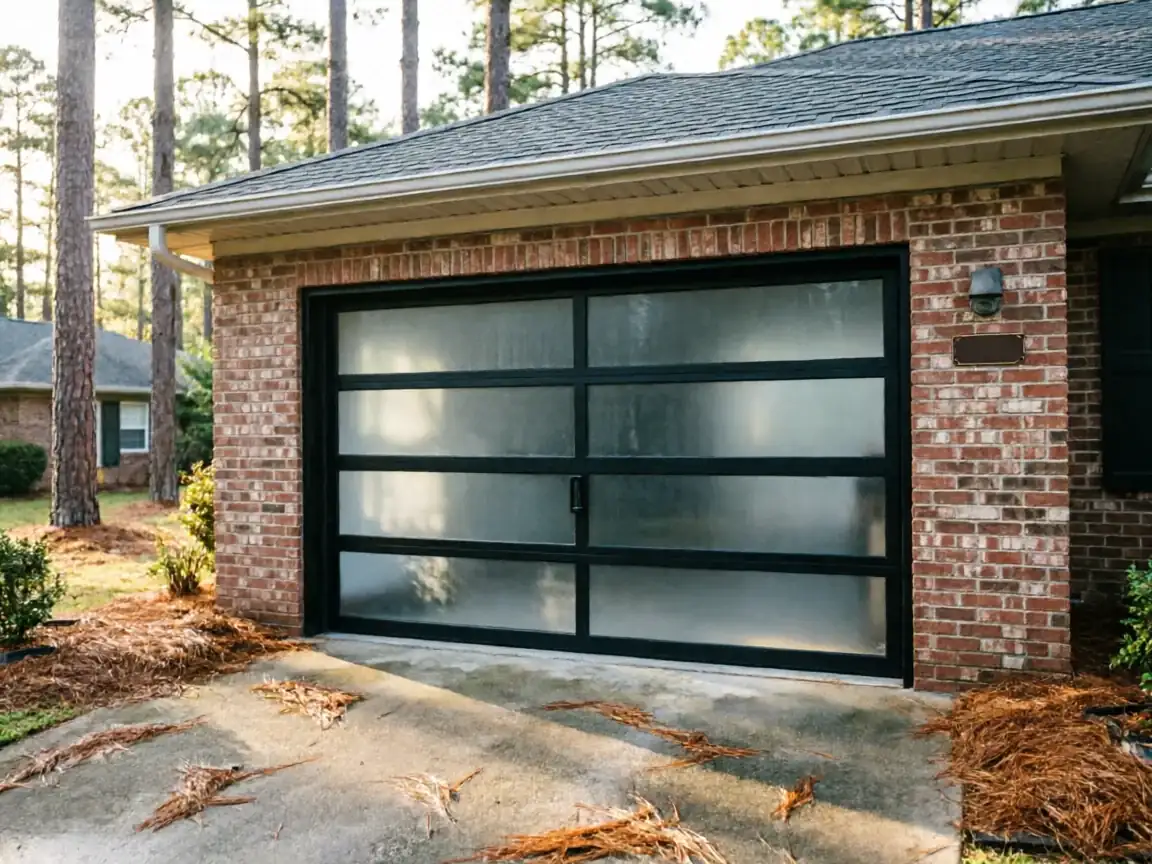
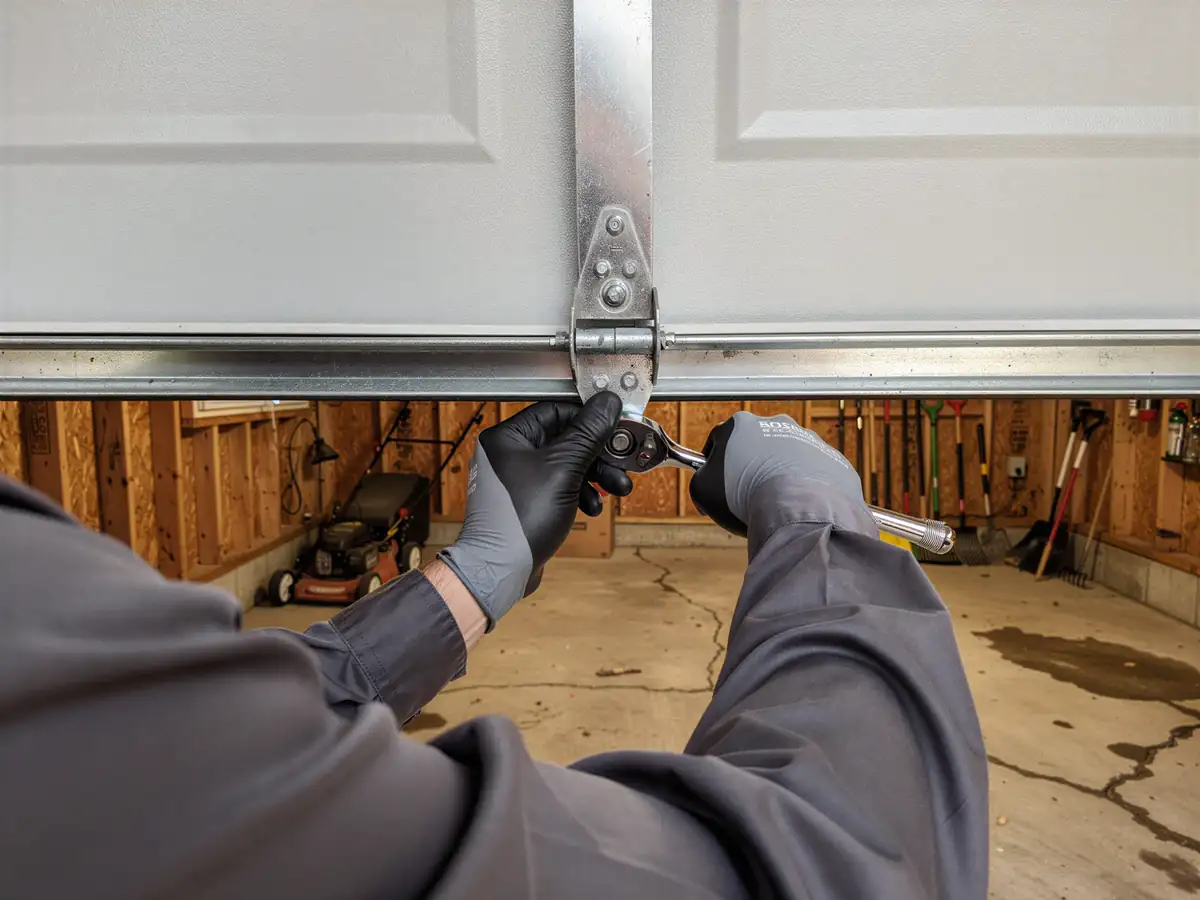
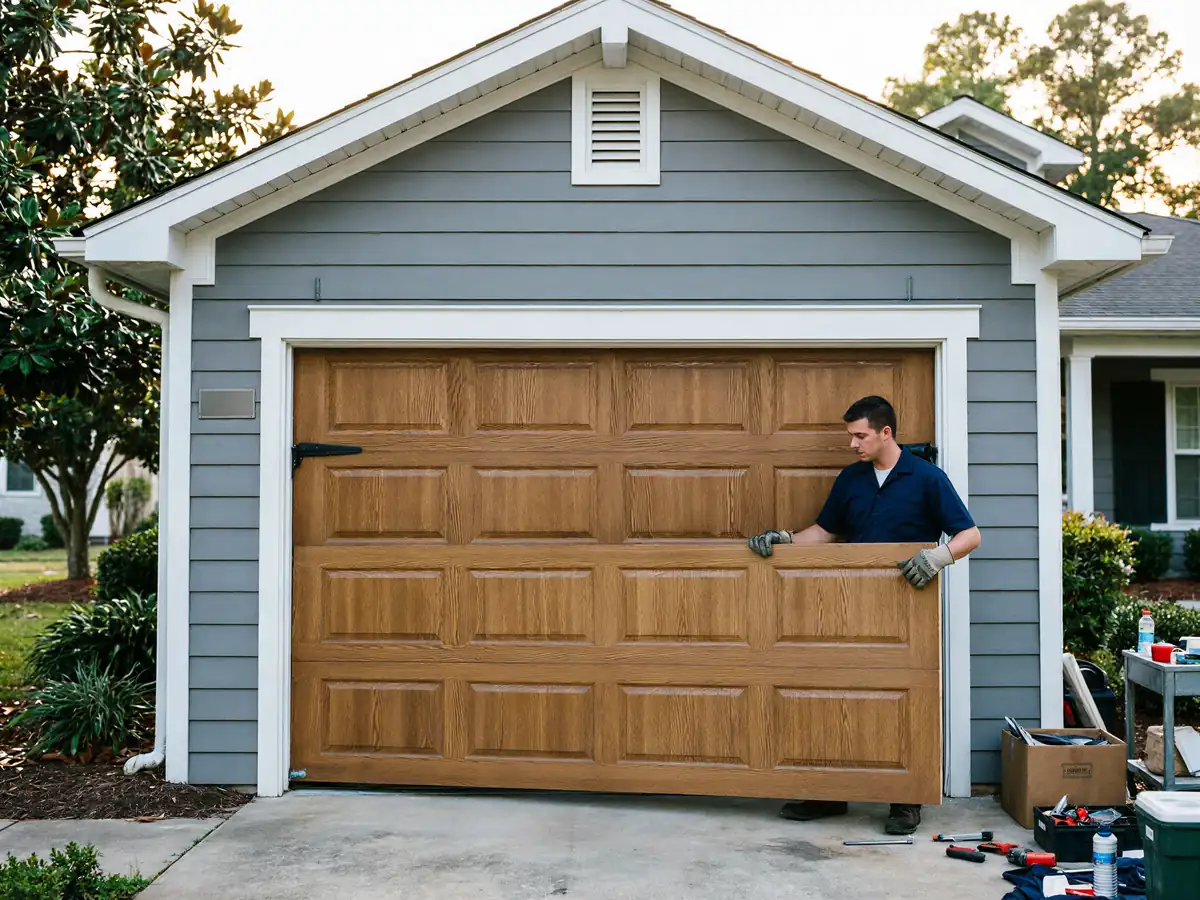
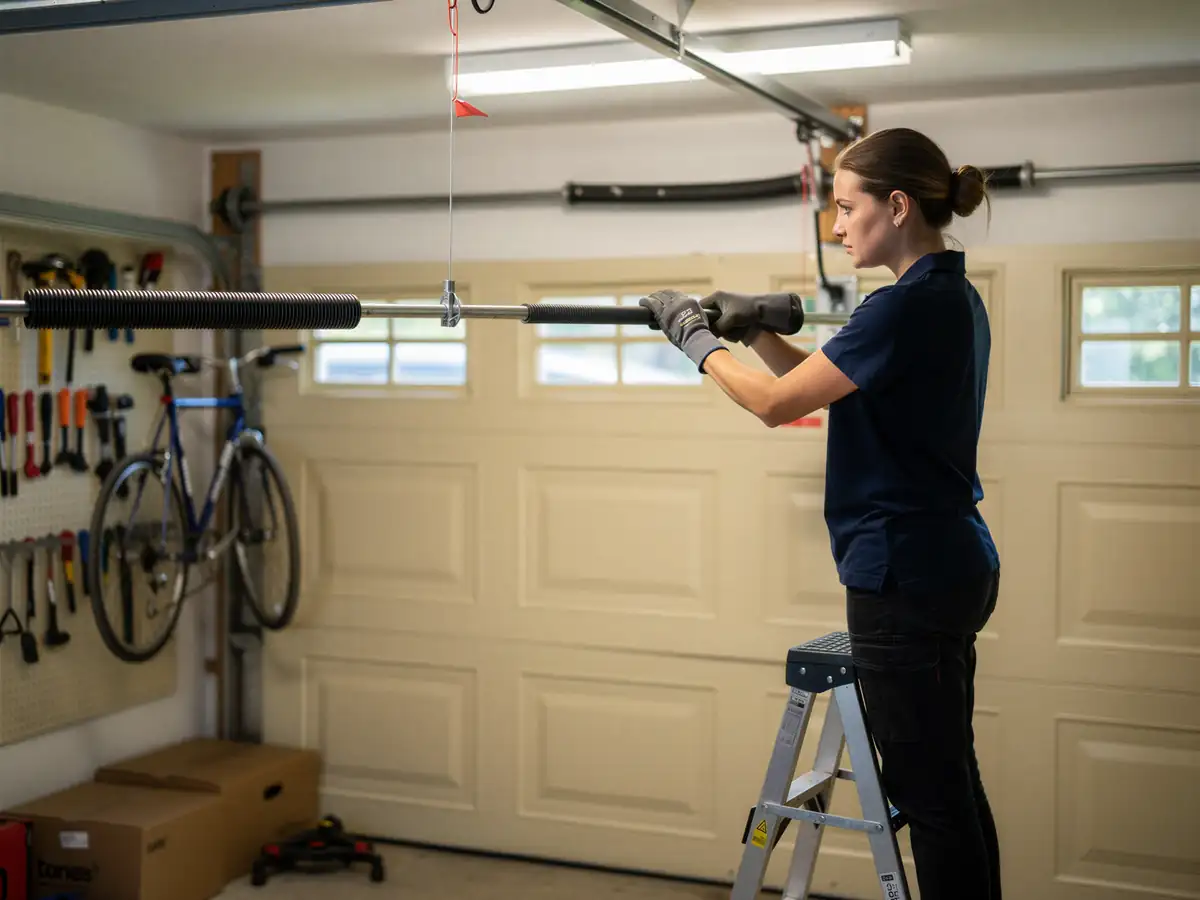
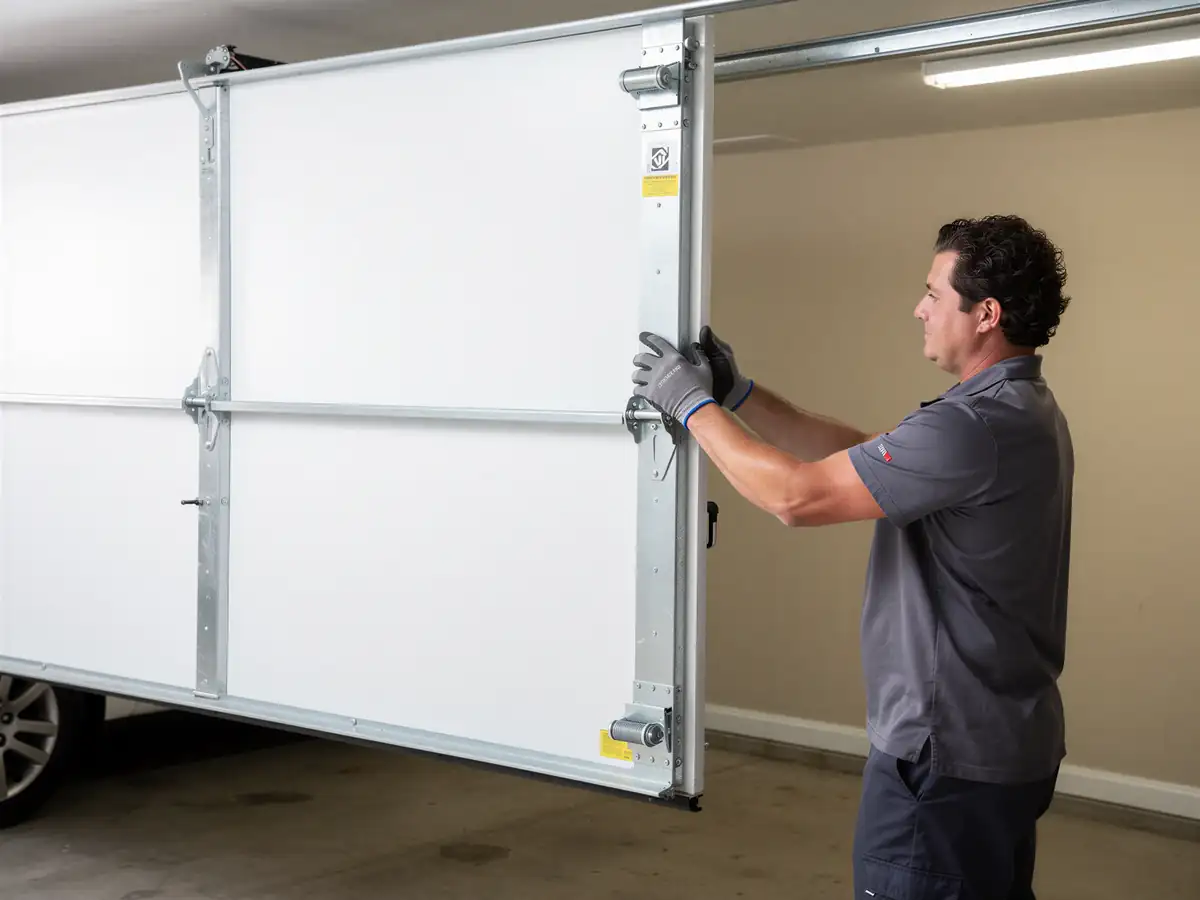
Stephens City's housing stock centers on 1979, right in the middle of the broader area's 1971-1991 building run. A door from that era is almost always steel sectional - either a single 9x7 for the one-car garages or a 16x7 double for the two-car layouts that became standard by the late 70s. Panels are single-layer steel, no foam core, which means they're light by today's standard but also dent easier and offer nothing for insulation. The lift hardware on an unmodified door from this period is torsion spring on a single center shaft, though we still find extension springs on some of the smaller one-car setups that never got upgraded.
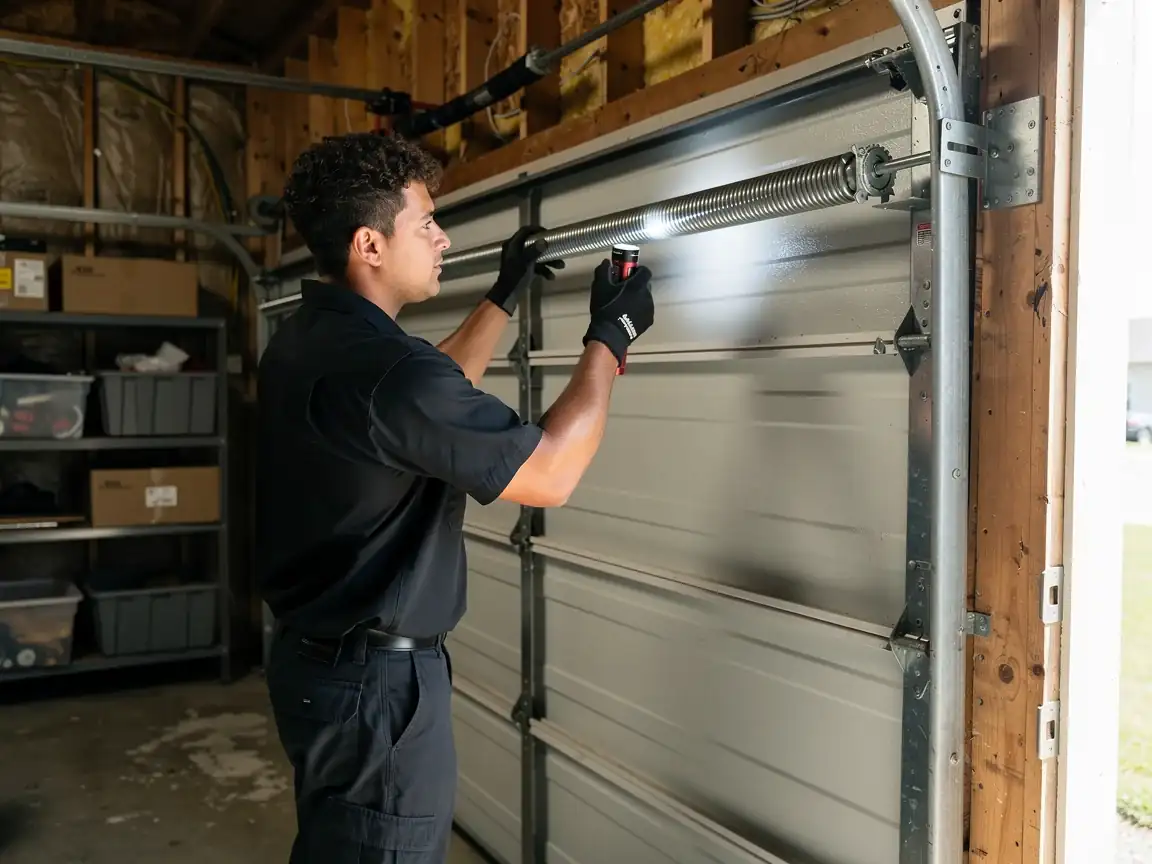
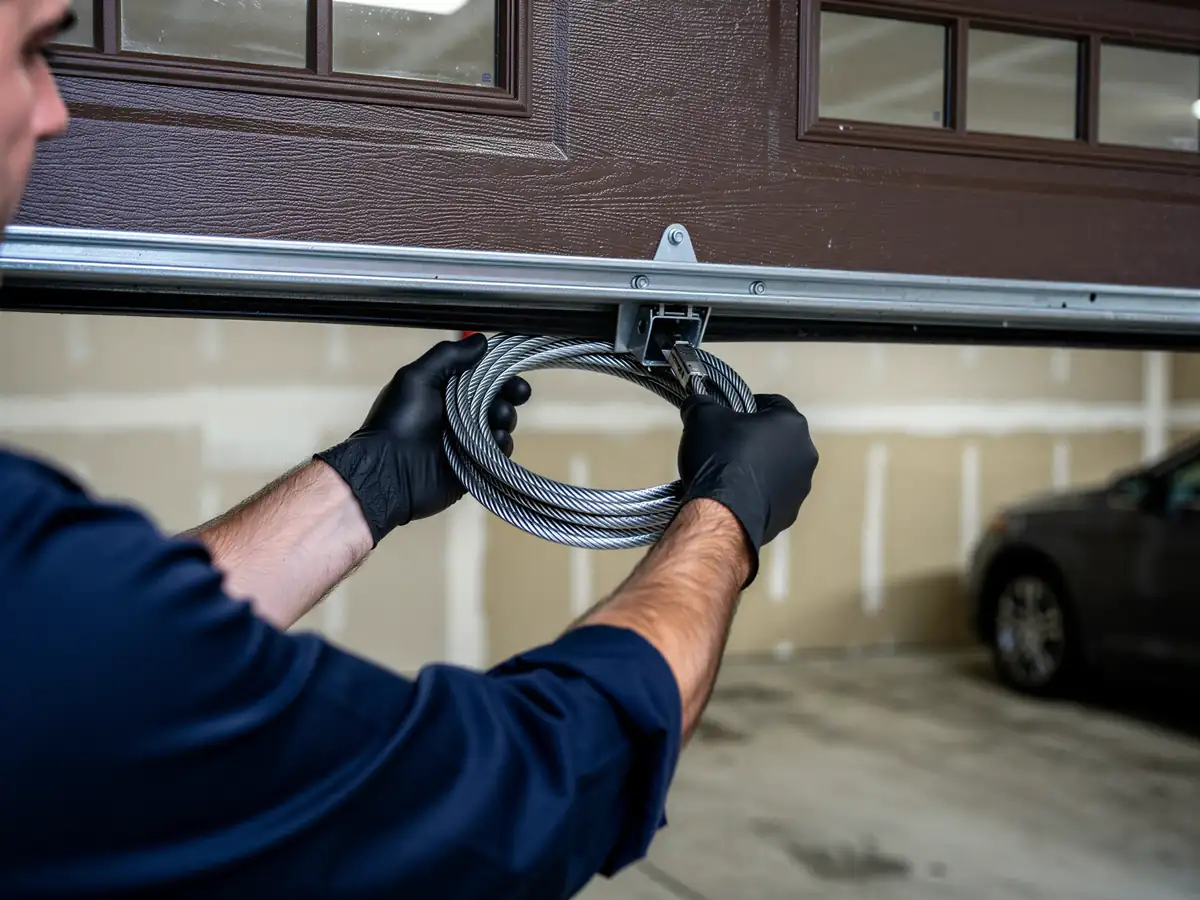
Because that profile is so consistent here, the truck headed to Stephens City carries what actually fails on it: standard-wind torsion springs sized for a 9x7 or 16x7 steel door, galvanized lift cables, 2-inch and 3-inch nylon rollers, and the shaft bearings that seize up after four decades of cold winters. We don't stock the oversized insulated-door springs because that's not the door sitting in most of these garages. See the service area page for how this area fits into the wider coverage from Winchester.
The DIY Question
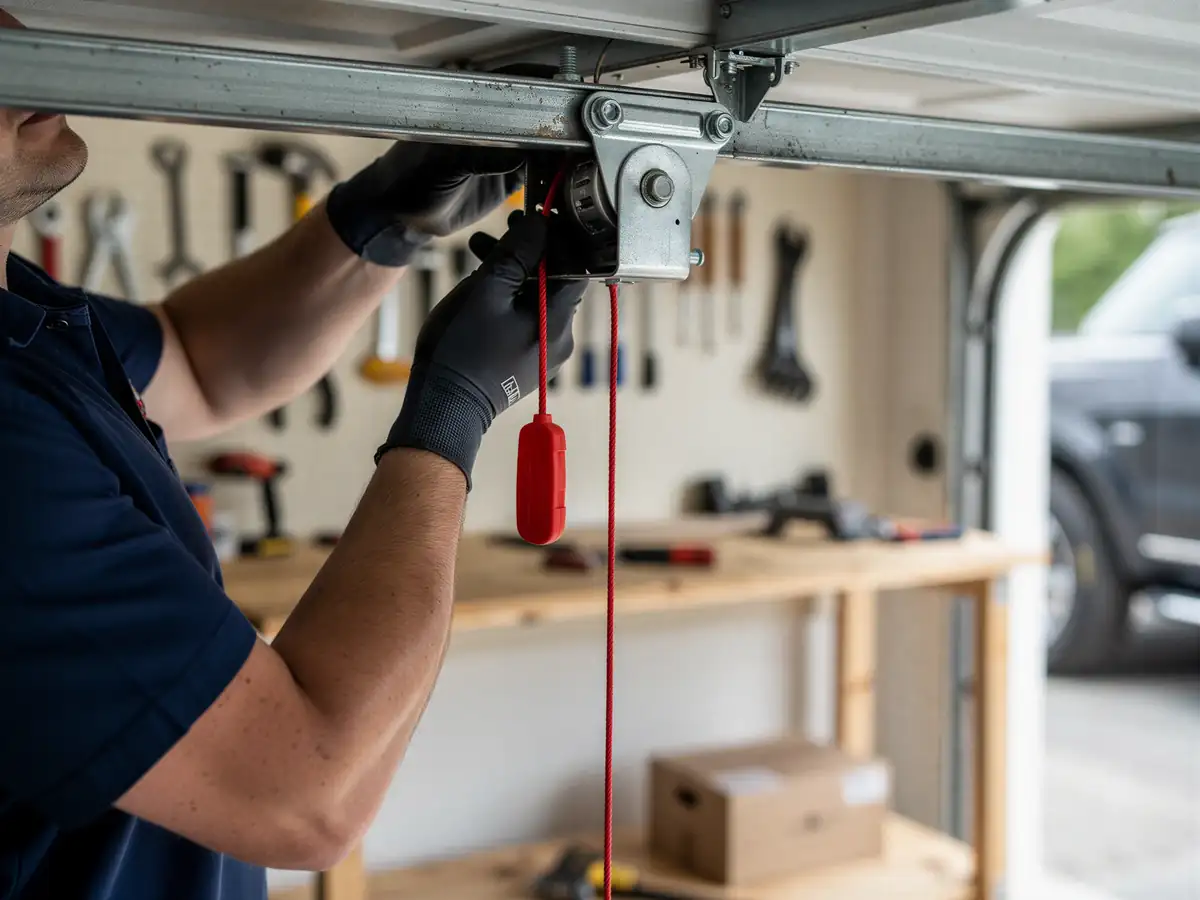
A torsion spring under full tension can break a wrist or worse, and that's the single most common emergency call we get from this part of town. If your door won't budge and you can see a gap in the spring coil above the door, stop. That's not a project for a Saturday afternoon, no matter how many videos make it look simple.
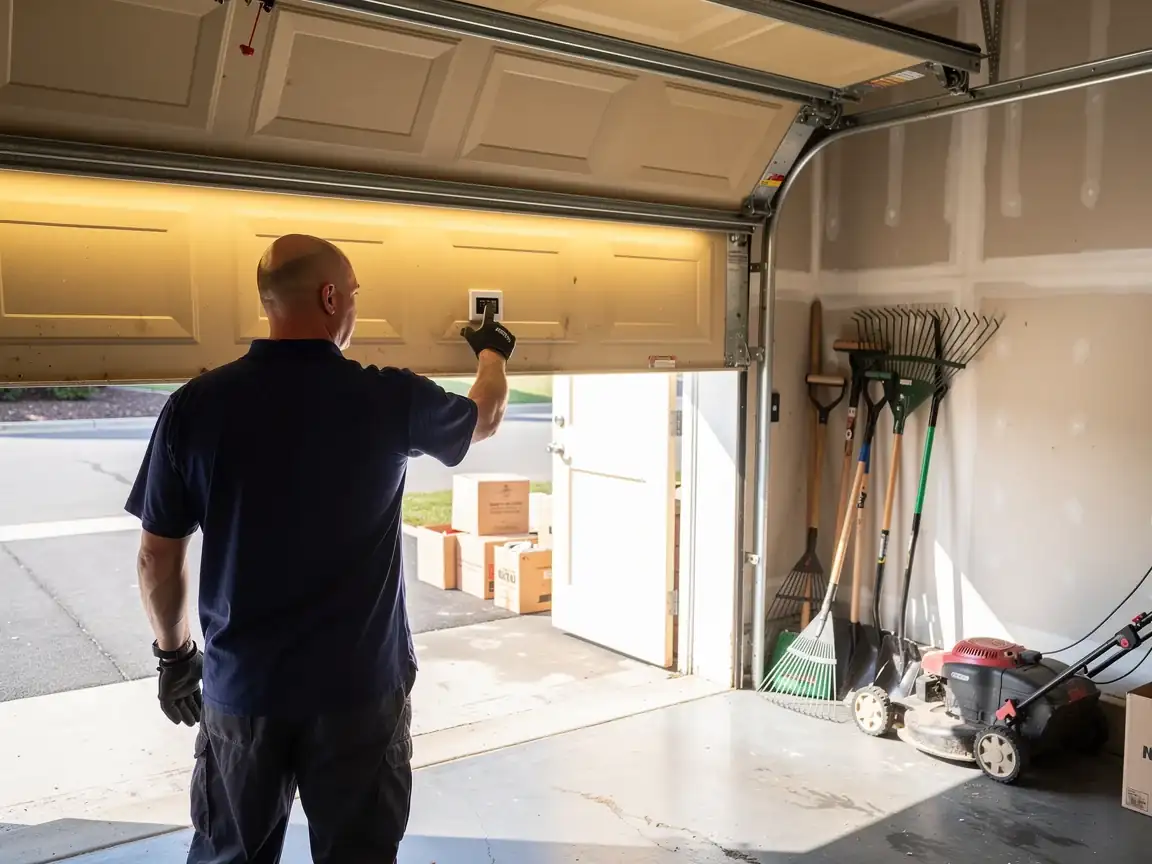
What's reasonable to try yourself: a remote that's stopped working might just need new batteries or a reprogram, and a door that reverses before it closes often just needs the safety sensor eyes wiped clean or realigned - they sit a few inches off the floor and get knocked out of line easily. Cables and rollers are a different story; replacing a frayed cable means releasing spring tension first, and that's the same hazard as the spring itself.
Here's the honest limitation: we don't make a special trip out for a five-minute sensor fix if that's genuinely all it is, and we'll tell you over the phone if that sounds like your problem before we book a truck. Saves you a bill and saves us a drive for something you can clear in two minutes.
Why It Happens Here
This area sits in a cold-winter climate band severe enough that steel contracts and grease stiffens hard once temperatures drop for good
Usually right when a spring that's been weakening all year finally lets go. A torsion spring doesn't fail gradually in a way you'd notice - it holds until it doesn't, and cold makes that final break more likely because the steel is less forgiving under tension at low temperatures.
Age is the other half of it
Houses here went up mostly around 1979, which puts the original hardware on unmodified doors past the 45-year mark. Torsion springs are rated in cycles, not years, but a door that's been opened and closed daily since the Carter administration has used up whatever cycle life it had regardless of the rating. We see more spring failures and more worn-out rollers on this side of the service area for that reason - it's not that the doors are built worse, it's that there are simply more of them from the same narrow stretch of years, all aging out at close to the same time.
What You Pay
We don't have a posted price list for Stephens City calls specifically, and we're not going to invent a number here just to fill the section. What we can tell you is what drives the cost up or down for a door from this era: a single-layer steel panel is cheaper to replace outright than repair piecemeal once it's dented in more than one spot, while a torsion spring swap on a standard 9x7 or 16x7 is usually a straightforward job precisely because the hardware is so consistent across this part of town - no oddball sizing, no insulated double-layer panel weight to account for.
Stephens City is six miles from our shop in Winchester, which keeps travel time out of the conversation for most calls. Household income here runs higher than the wider service area's median, and we do see more owners choose a full opener replacement over a patch repair once a motor starts slipping - sometimes it's the better call anyway once a unit is old enough. For the general service and pricing approach across the area, see the Winchester repair page.