What You Are Seeing
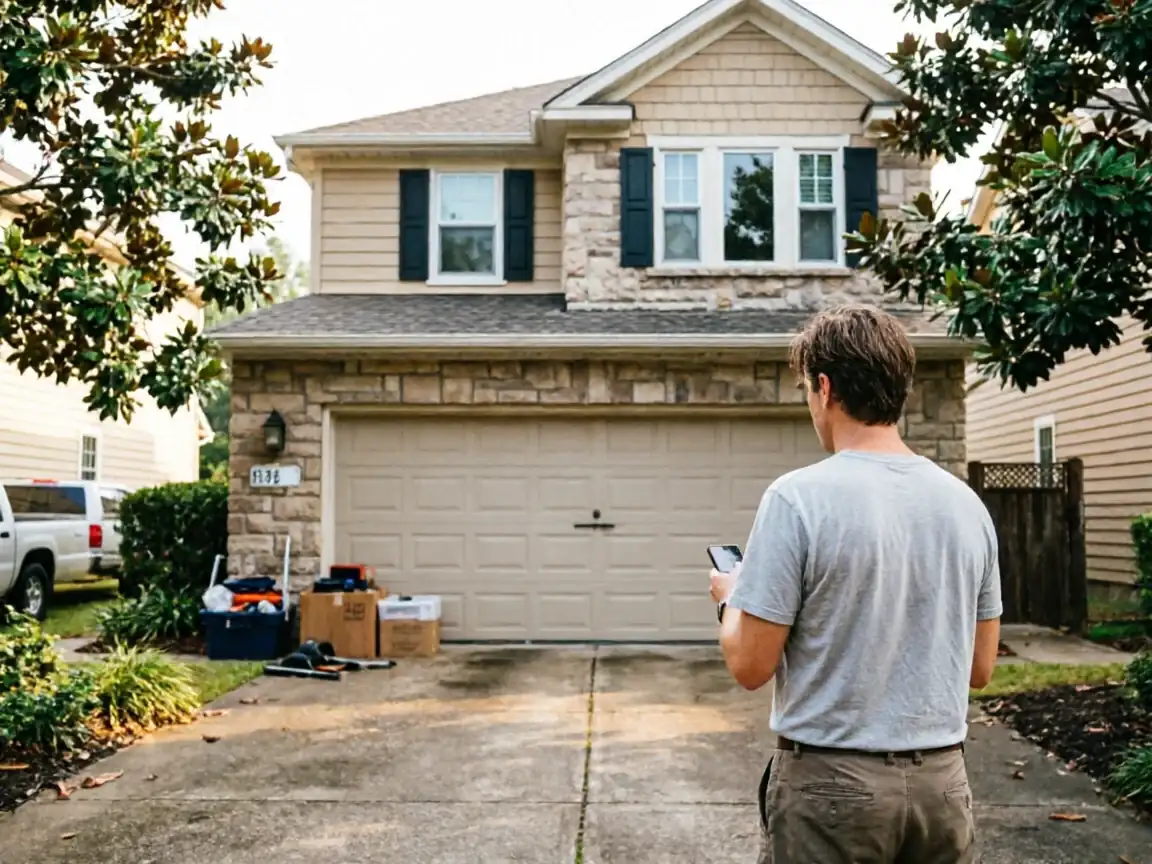
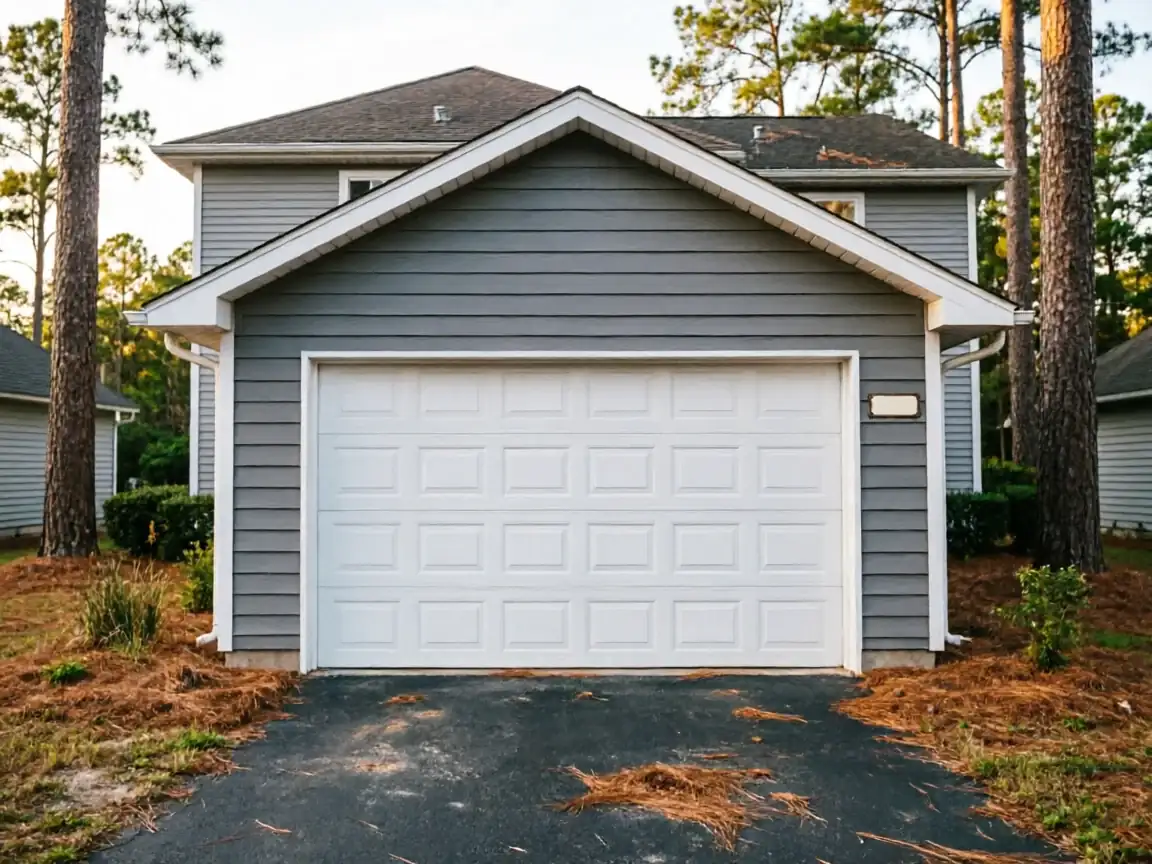
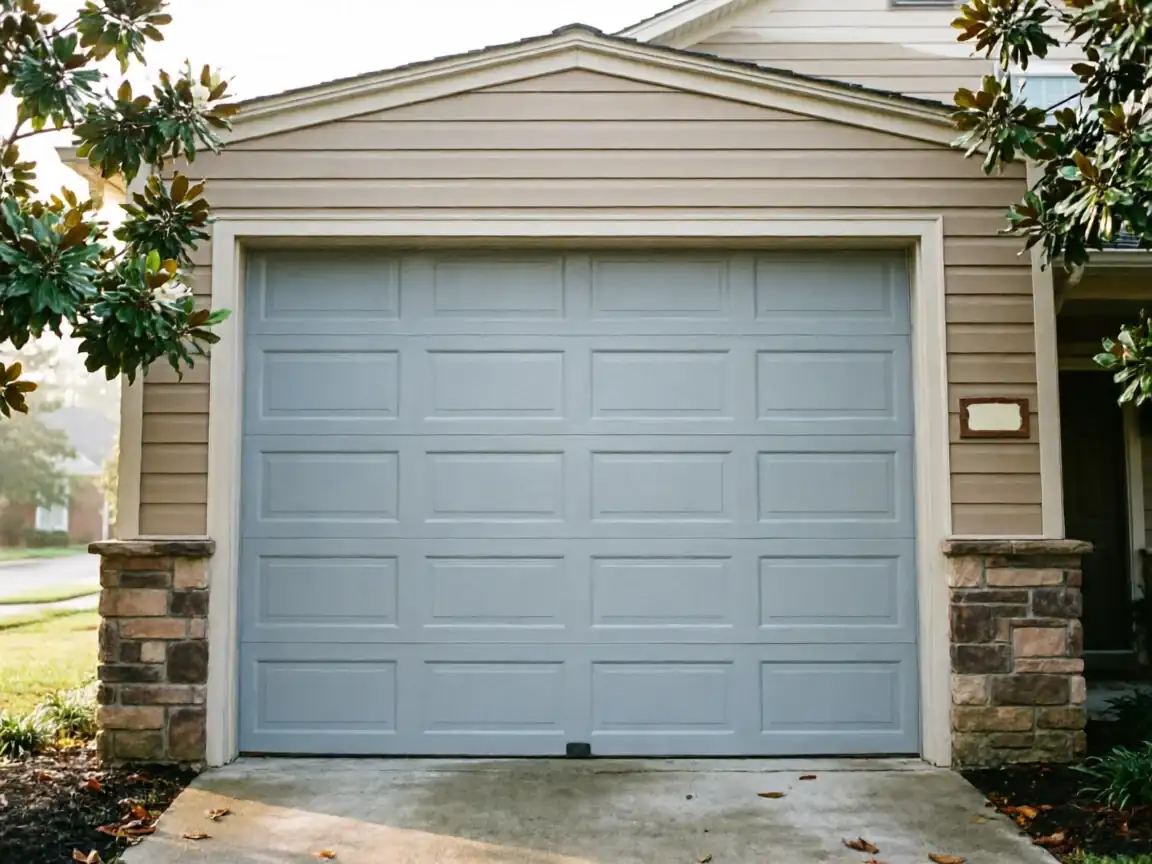
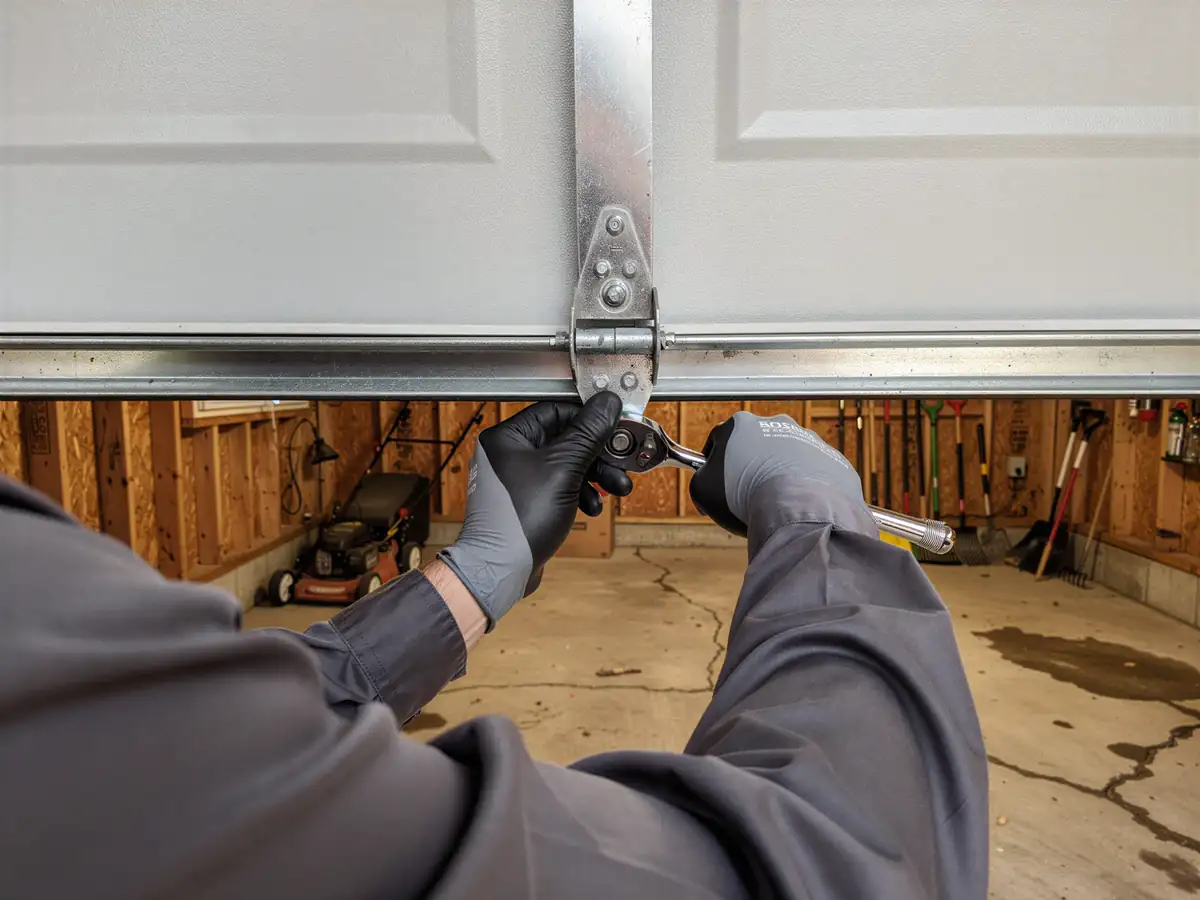
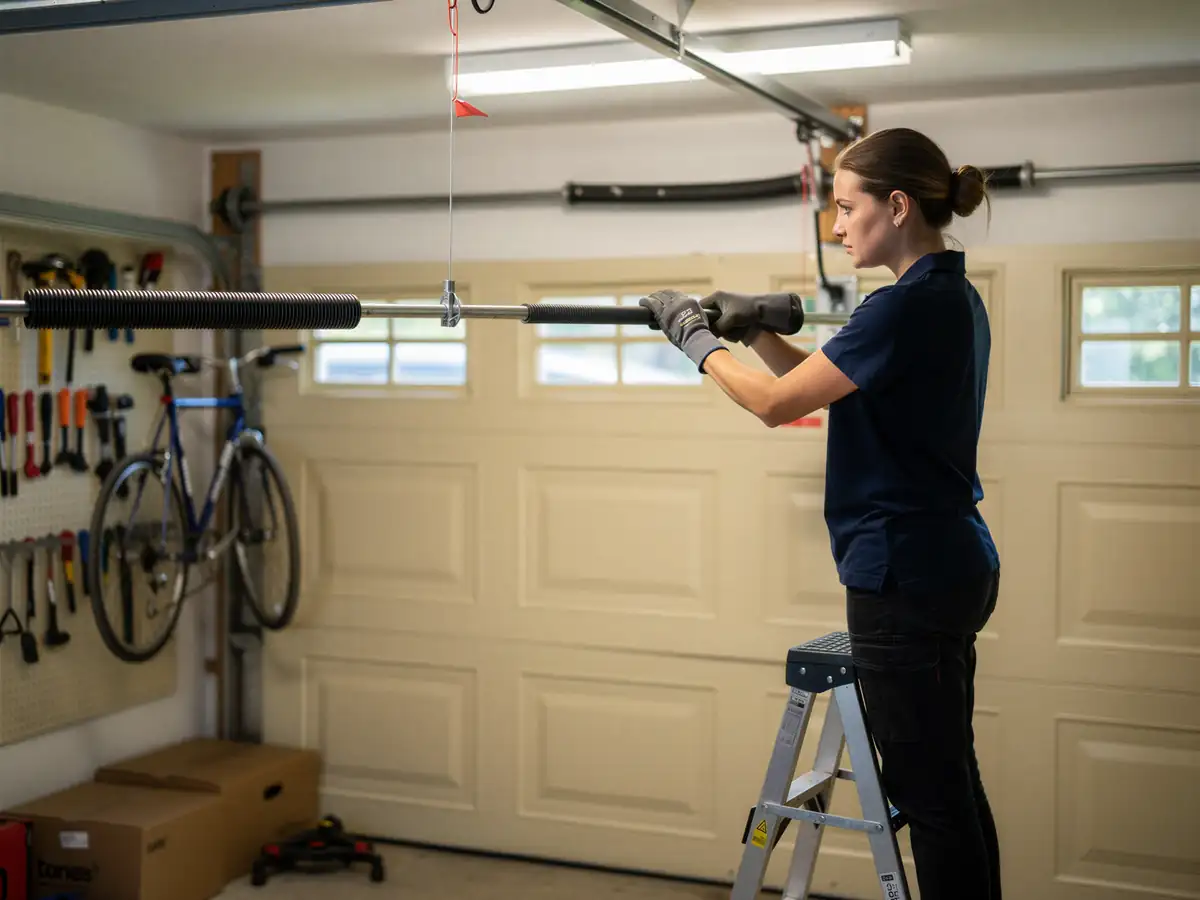
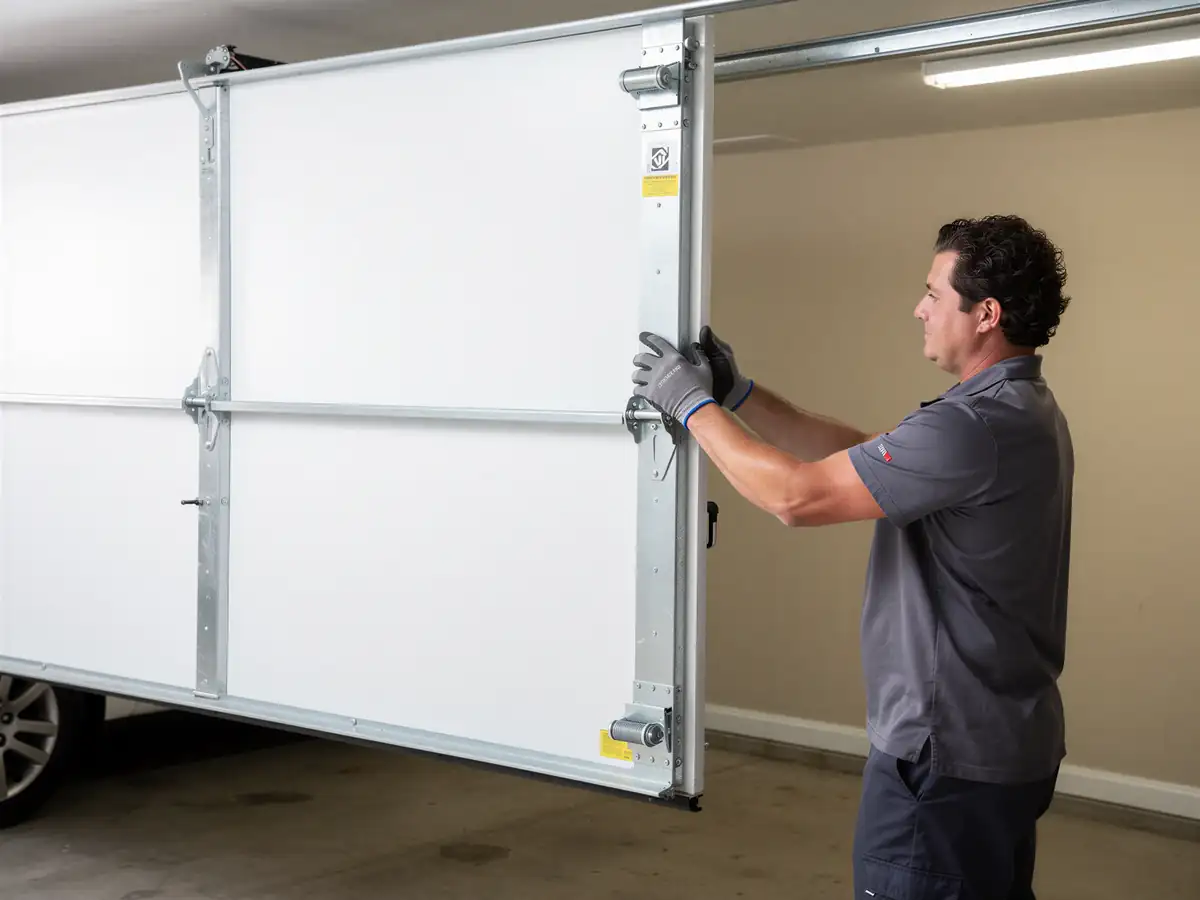
Most garage doors in Strasburg went up around 1984, give or take a few years either side. That puts you squarely in the era of single-layer steel sectional doors, usually a 16x7 double on homes built for a two-car garage, with the thinner gauge panels common before insulated doors became standard. A lot of these are still running the original extension springs mounted along the horizontal track rather than a torsion bar over the header, since torsion setups didn't become the default on production homes here until later in that build window. If your door still has the exposed stretch springs with the safety cables threaded through them, that's original hardware doing forty years of work. The springs on these doors weren't built for an unlimited lifespan, and by now most have been replaced at least once, sometimes with a mismatched pair that wears unevenly. Track alignment is the other issue that shows up a lot in this age group - decades of settling on the slab plus repeated seasonal swings pull the vertical tracks out of plumb by a few degrees, enough that the rollers start chewing into one side of the track instead of riding center.
How We Fix It
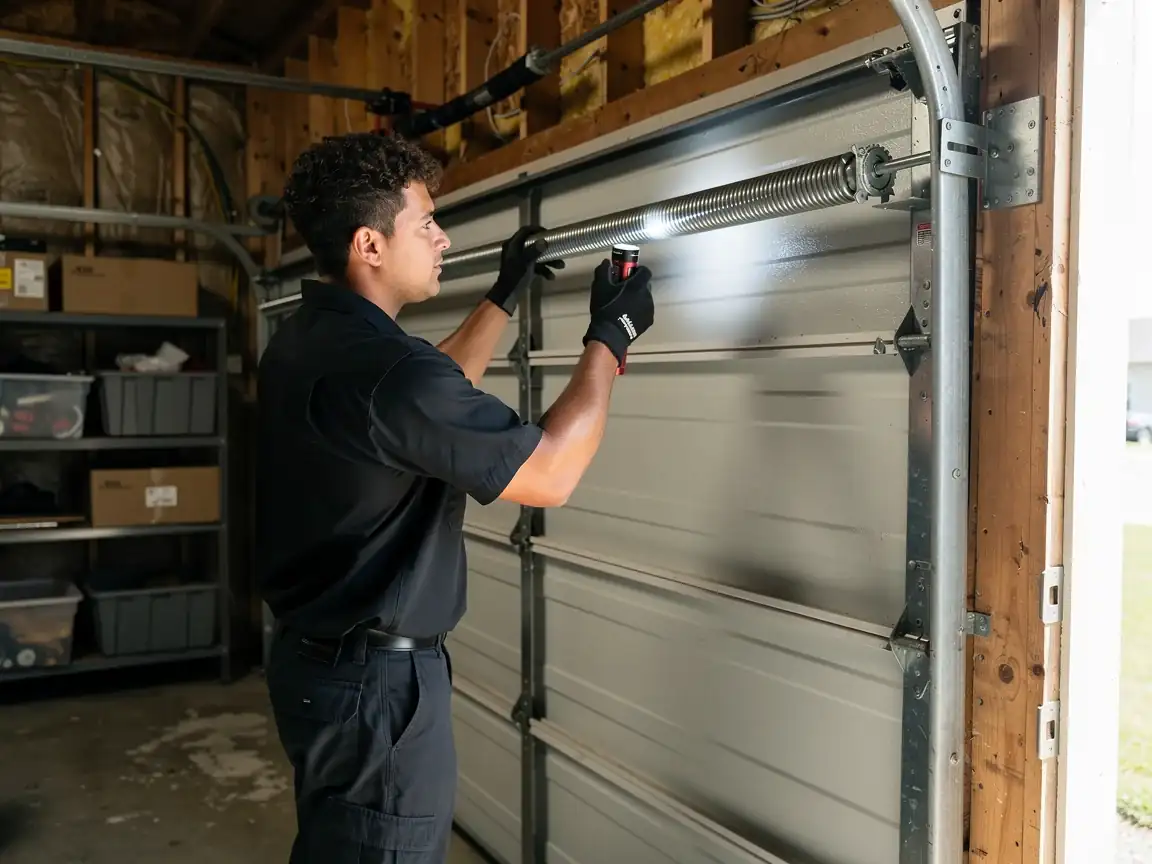
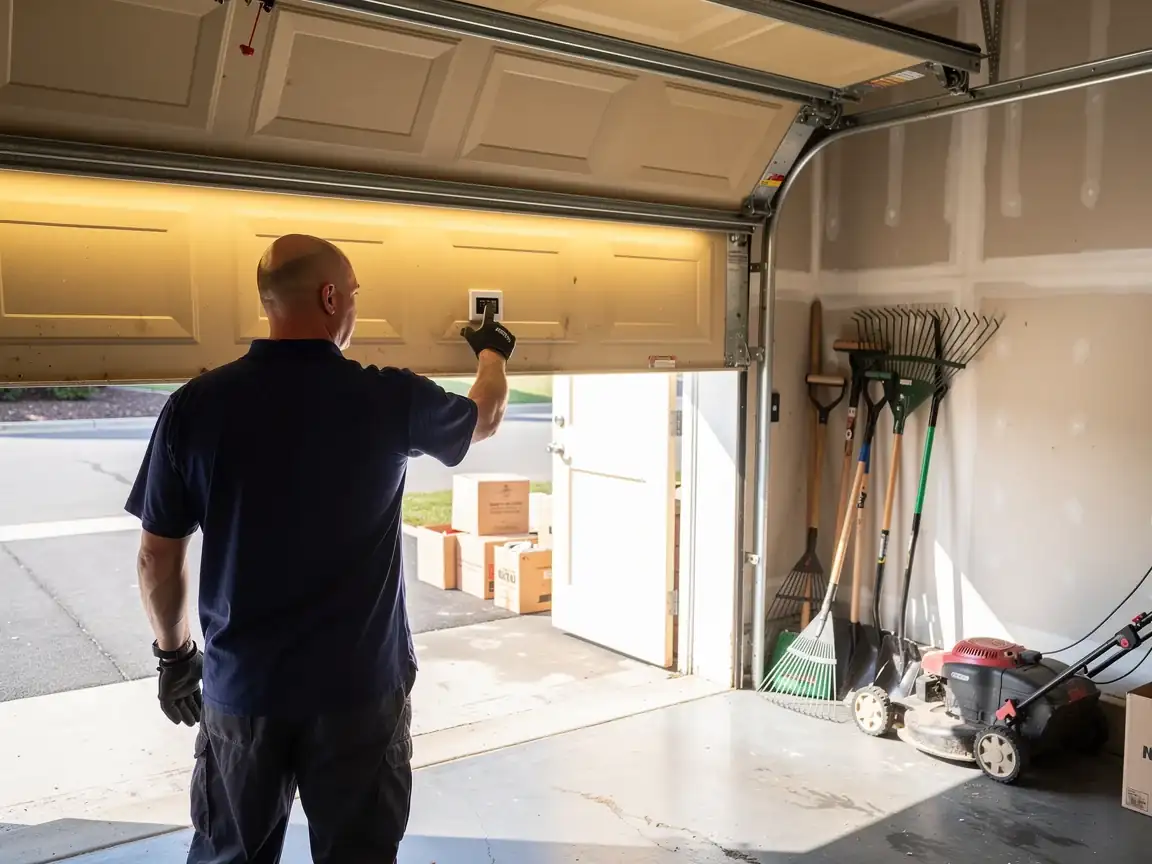
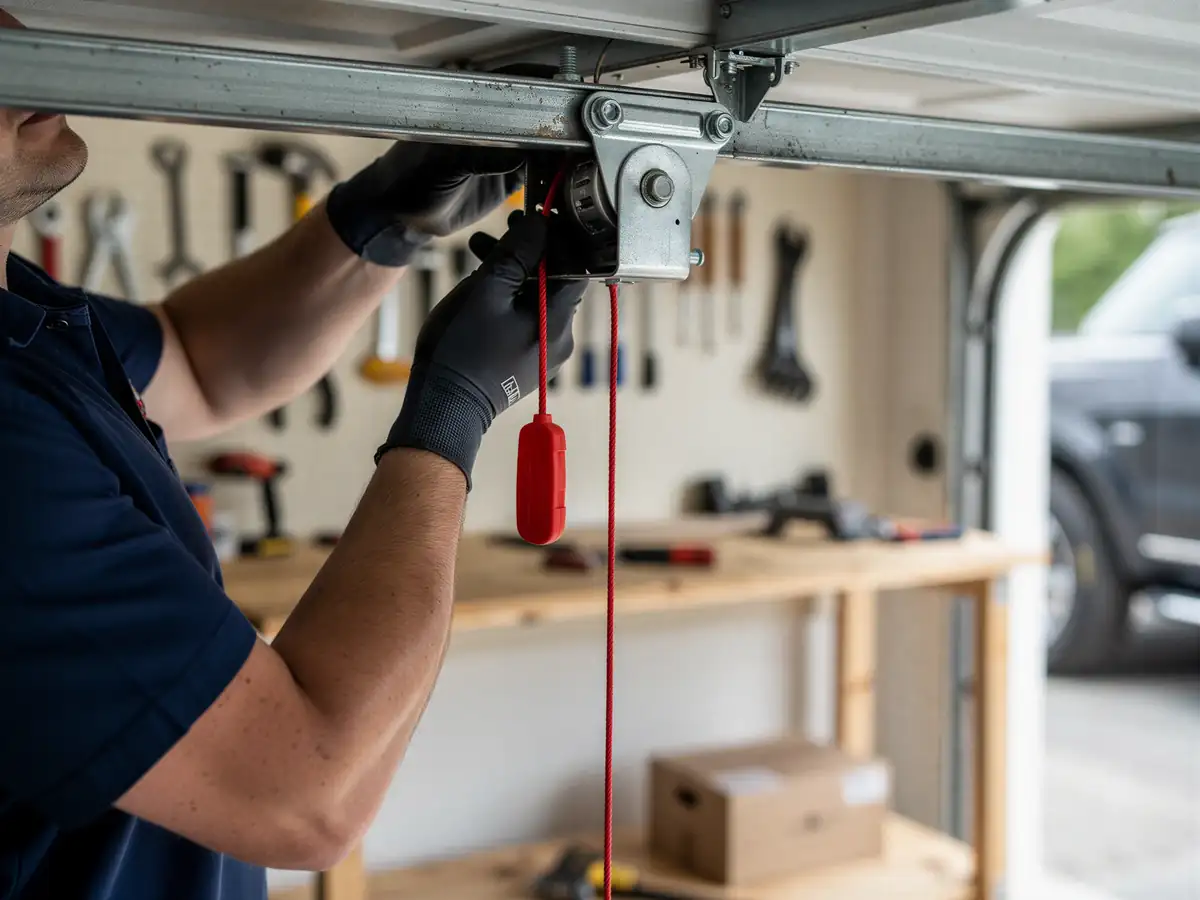
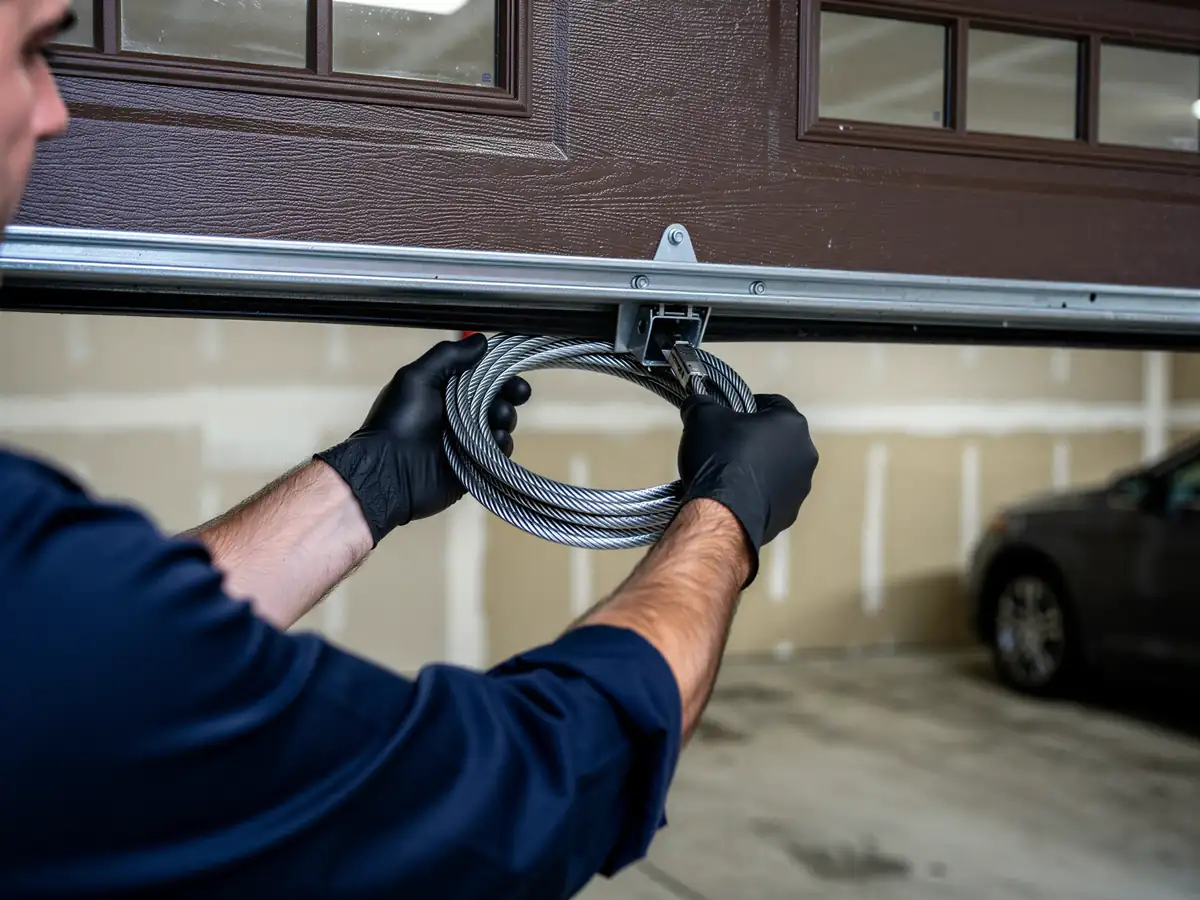
Maintenance on a door this age starts with the springs, because that's what's doing the heavy lifting and what fails without warning. We check wind count and wire gauge against the door weight, not just swap in whatever's on the truck. If you're still on extension springs, we inspect the safety cables - a lot of original installs from the early 1980s didn't have them, and that's worth correcting regardless of what else the door needs. From there it's track alignment, roller condition, and lubrication on the hinges and hardware, plus a check of the opener's force settings if a motor's been added since the door went in. We don't repaint or refinish panels - if the steel's rusted through or the finish has failed, that's a replacement conversation, not a maintenance one. For a door of this era, the honest answer is often that a full tune-up buys you several more years, but if the springs have already been replaced twice and the panels are dented or rusting at the bottom, you're better off budgeting for a new door than keeping this one alive.
Why It Happens Here
Strasburg's housing stock sits right around 1984 for the median build year, with roughly 2,984 households in the area - smaller than the broader Winchester service territory, and skewed toward homes built in that same narrow window rather than a mix of older and newer construction. That consistency matters for maintenance: when most garages on a block went up within a few years of each other, the springs, tracks, and panel gauges are wearing out on a similar timeline, which is why a lot of Strasburg calls cluster around the same kind of fault rather than a grab bag of issues. The region's winters do their part too - this area sits in a cold, severe climate band, and the repeated freeze-thaw cycling is hard on steel hardware and on the grease and lubricant that's supposed to keep rollers and hinges moving smoothly. Median household income here runs around $59,614, noticeably lower than the wider service area's $79,137, which is worth mentioning because it shapes the repair-versus-replace math - a tune-up that extends a door's life by a few more winters is often the more practical call here than it would be elsewhere.
Booking a Visit
If your door is from the original 1984-era build and you haven't had the springs or track looked at recently, that's the right starting point for a maintenance visit. We travel out from Winchester to handle Strasburg calls, so it helps to describe what you're seeing - uneven closing, grinding on one side, a door that feels heavier than it used to - before we schedule, so we bring the right stock on the truck. You can see more on how we cover this area on our service page, or check our general maintenance page for what a typical visit includes.