Stocked Parts
Most of the garage doors we see in Berryville sit on openers that went in when the house did, and the median year built out here is 1991. That means a lot of chain-drive and screw-drive units from the early-to-mid 90s, paired with two-car steel doors wide enough for the driveways built in that era. The circuit boards, capacitors, and drive gears from those units are the parts we carry on the truck most often, because they're the ones that fail first on a motor pushing 30-plus years.
Where we can't help is sourcing a logic board for a model that's been out of production since before some of our customers were born. A few manufacturers stopped stocking parts for units that old, and when that happens, we'll tell you straight instead of chasing a board that doesn't exist. On a motor that age, a full opener swap is often the honest answer, not a repair quote that keeps growing.
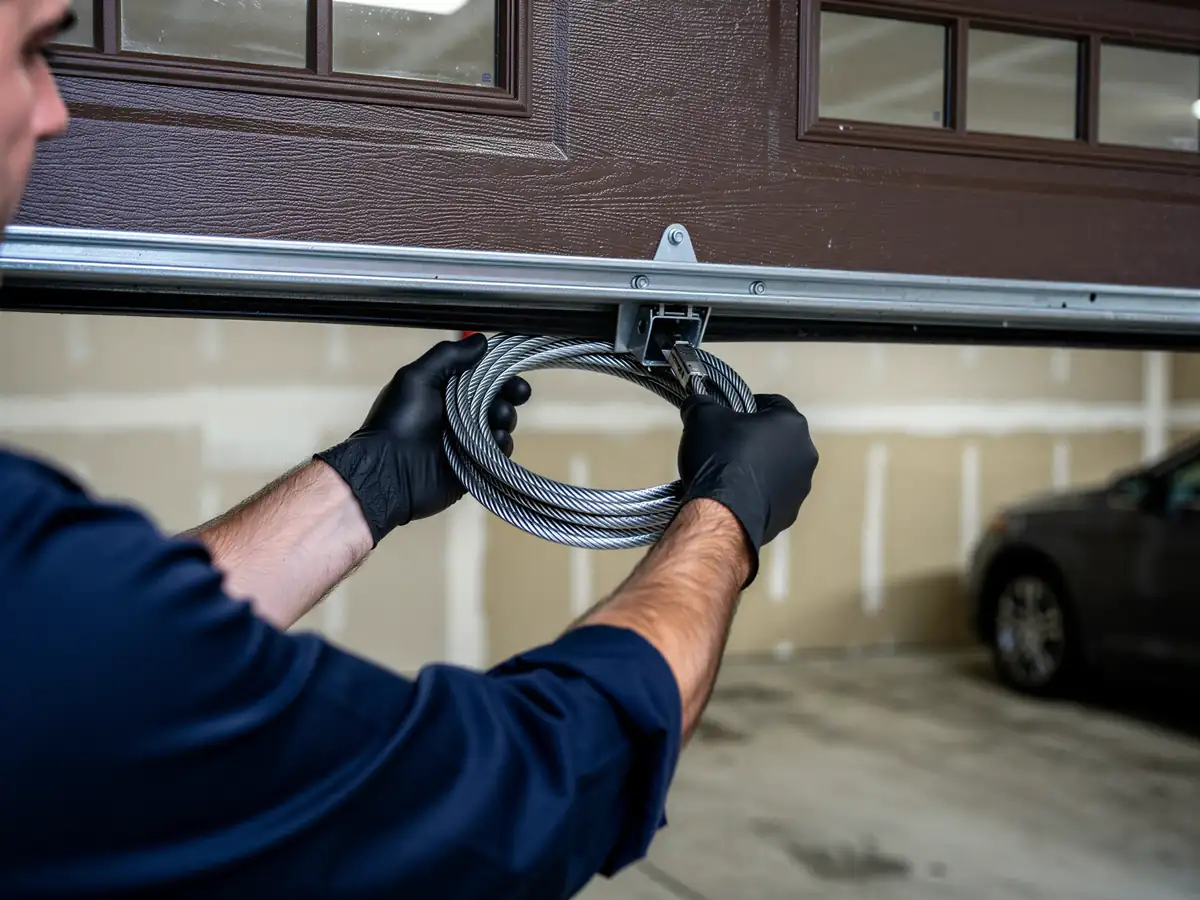
We stock belts, chains, safety sensor pairs, and the drive gears that strip under load, since those are the failures that actually walk a homeowner out to the driveway at 6 a.m. with a door that won't move.
How Long You Are Without the Door
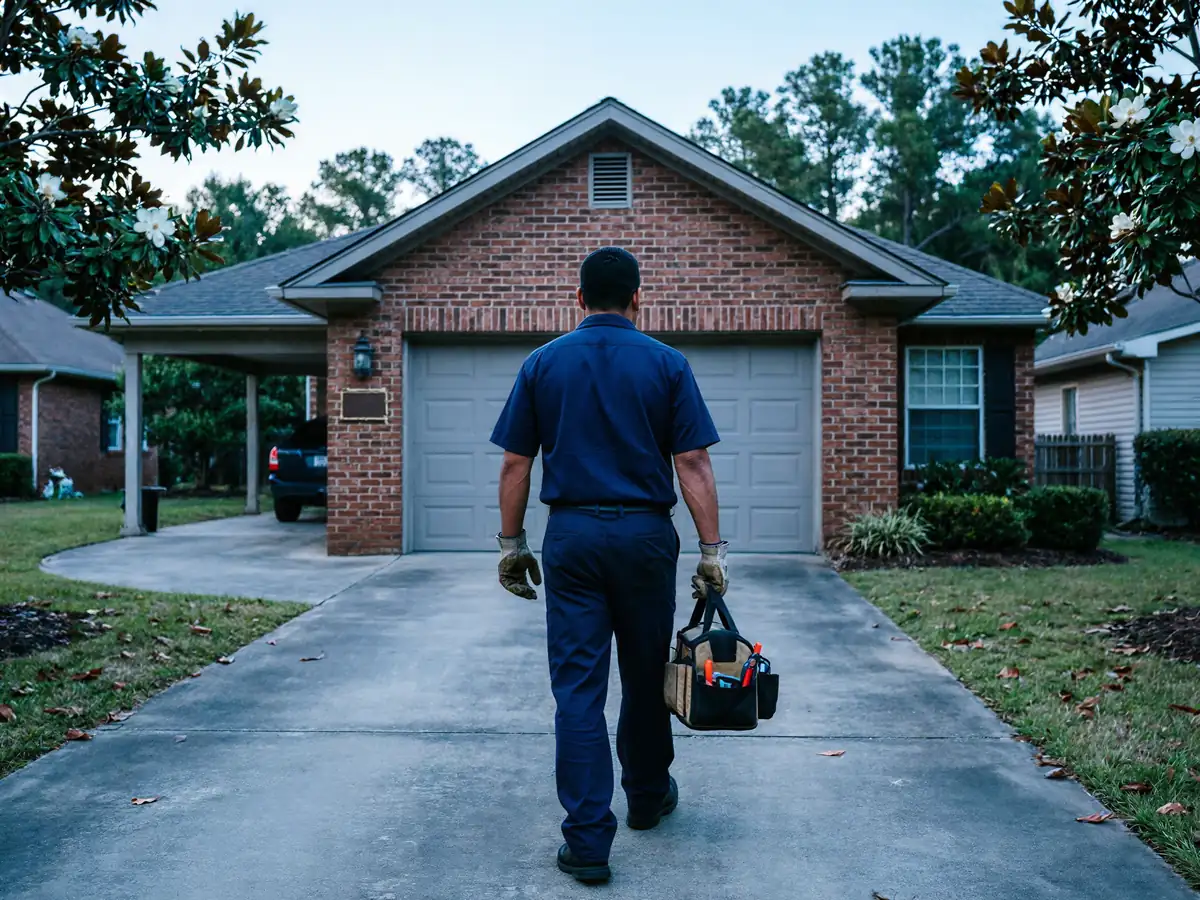
We run this job from Winchester, about 11 miles out, so there's no branch sitting in Berryville waiting on a call. That distance doesn't change what's wrong with your opener, but it does mean scheduling works differently than it would for a job five minutes from the shop - we build the route around where else we're headed that day.
A stuck door isn't usually a security problem by itself; most opener failures leave the door closed and locked, not open and unguarded, since the motor losing power doesn't release the lock bar. That's worth knowing if you're deciding whether this is an emergency or a next-available-slot job. We won't quote you a response time we can't back up from 11 miles away, but we will tell you honestly whether your situation can wait until tomorrow or needs to move up the list.
What Can Go Wrong
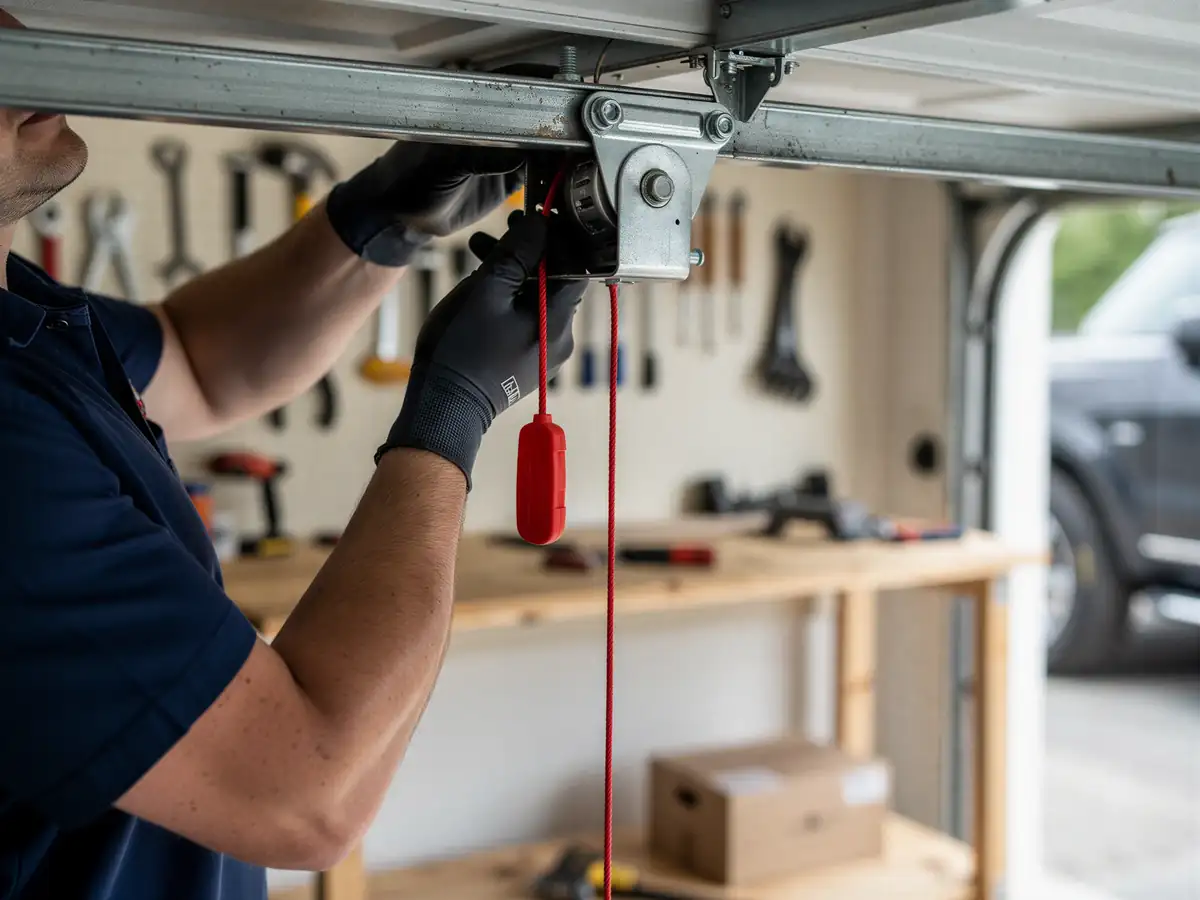
On a chain-drive opener from the early 90s, the first thing to go is usually the drive gear
A small plastic or nylon gear inside the housing that strips its teeth after years of pulling a heavier steel door. You'll hear the motor running but see the door not move. After that it's the circuit board, where age and moisture corrode the contacts until the wall switch or remote stops triggering anything.
Safety sensors drift out of alignment over time too, especially if the door's been bumped or the bracket's loosened
The opener will refuse to close and just reverse, which gets mistaken for a dead unit when it's really a $20 fix. Capacitors on older motors also weaken, so the opener strains and groans before finally quitting instead of failing all at once. None of this is dramatic. It's wear, on schedule, on a motor doing the job it was built to do three decades ago.
Why It Happens Here
The climate band this area sits in runs cold and severe, and that matters more for openers than people expect. Cold thickens the grease in an old motor's gear housing, so a unit that's already tired has to work harder every winter morning just to get moving - that's often the final push that strips a worn gear or trips a weak capacitor. Garage doors and tracks also contract slightly in deep cold, which adds resistance right when the opener has the least reserve power left to give.
Layer that onto the age of the housing stock - a median build year of 1991 means a lot of these openers are original equipment, installed once and never swapped - and you get a predictable pattern: units that held up fine for twenty winters start failing in bunches once they cross thirty. It's not bad luck. It's a batch of motors built in the same few years finally running out of road at the same time, in a place that gets worked harder than you'd think for a town this quiet.