What Can Go Wrong
Front Royal's median household income is $64,025, noticeably under the $79,137 median across the wider service area. That gap matters here specifically because it changes where the repair-or-replace line sits. A $300 logic board swap makes sense on almost any budget. A $600+ full unit replacement is a harder call in a town where more households are watching that number. We always quote the repair first and tell you honestly when the opener is too far gone for it to be worth doing.
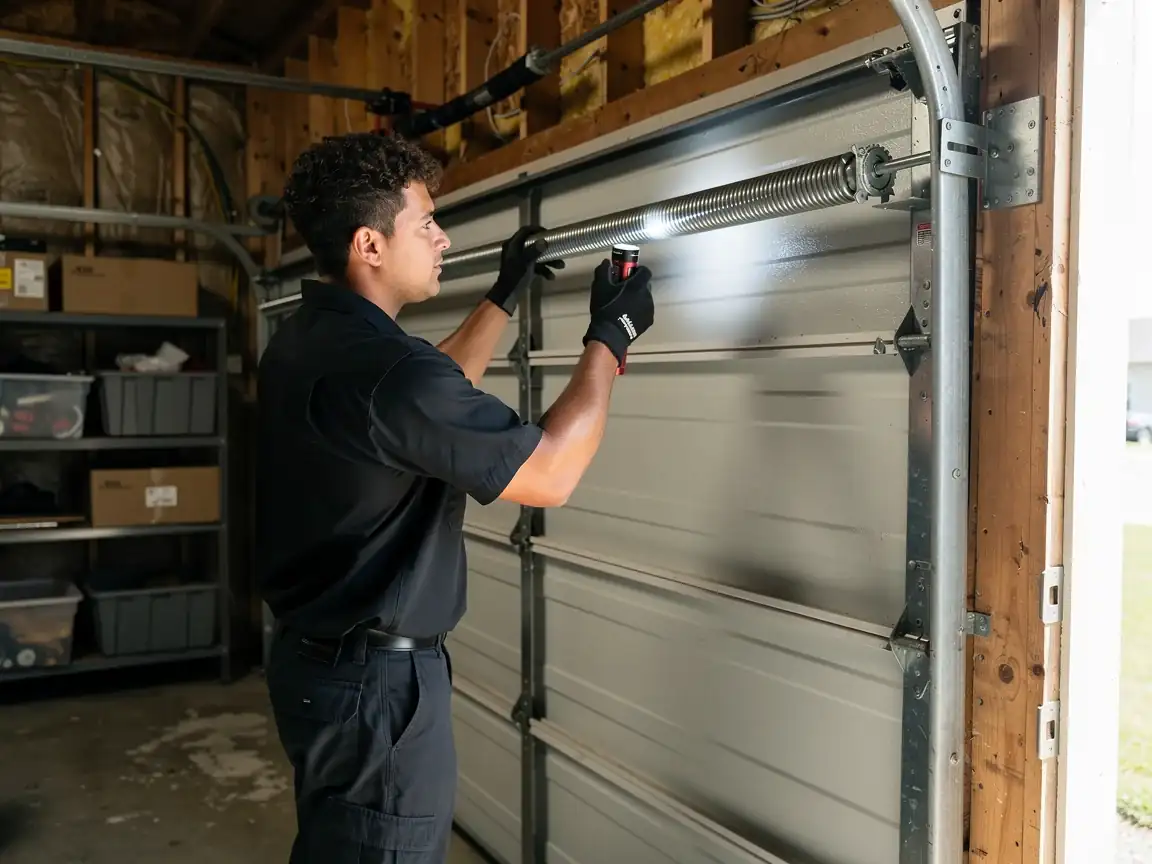
The failures themselves are ordinary for the opener's age: a stripped drive gear, a dead capacitor on an older chain-drive unit, a logic board that won't take a signal, or a safety sensor knocked out of alignment. None of that is unique to Front Royal. What is specific is which of those faults you're likely to hit, because of when these houses went up.
Why It Happens Here
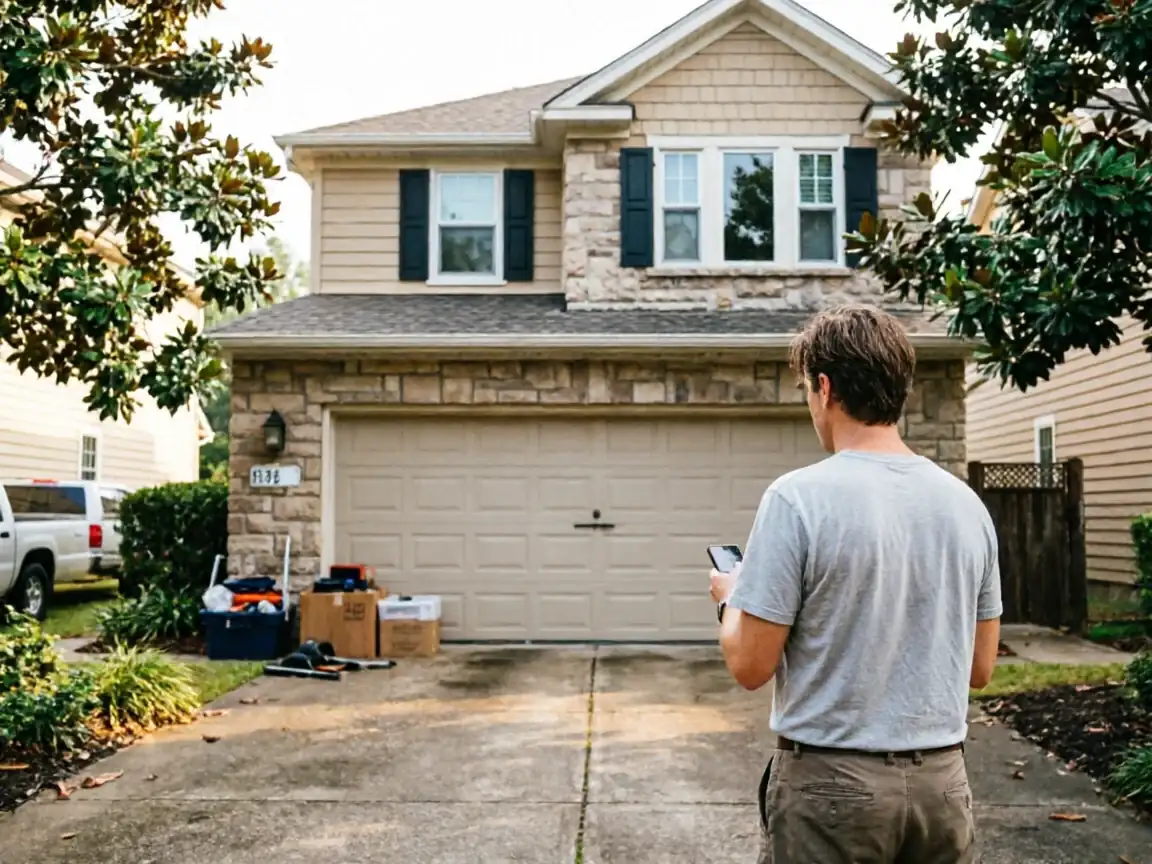
The typical Front Royal house dates to around 1974, a touch earlier than the 1971-1991 range that covers most of the wider area with a median closer to 1980. An opener installed or replaced in a house of that vintage is more likely to be a chain-drive unit from an earlier generation of hardware, sometimes with a transformer or capacitor that's simply reached end of life rather than failed from a single event.
The region sits in a cold, severe winter climate band. Cold doesn't damage an opener's circuit board directly, but it stiffens grease in the drive mechanism, pulls more amperage at startup, and puts extra load on a motor that's already working at the edge of its service life. On a 1974-era opener, that's often the push that turns intermittent failure into total failure.
We drive the 17 miles from Winchester for this call. It's not a reason for the job to take longer, but it does mean we plan the visit rather than treat it as a walk-in stop.
Stocked Parts
We carry the parts that fail most often on openers of this age
Drive gears, standard logic boards, safety sensor pairs, and capacitors for chain-drive units. Those cover the bulk of what comes up on a 1974-vintage opener.
What we don't carry on the truck is a part specific to a long-discontinued model
Or a proprietary board that only the original manufacturer still stocks. If your unit needs one of those, we'll tell you on site and give you a real timeline rather than a guess, since that part may need to be ordered in before we can finish the job.
What You Are Seeing
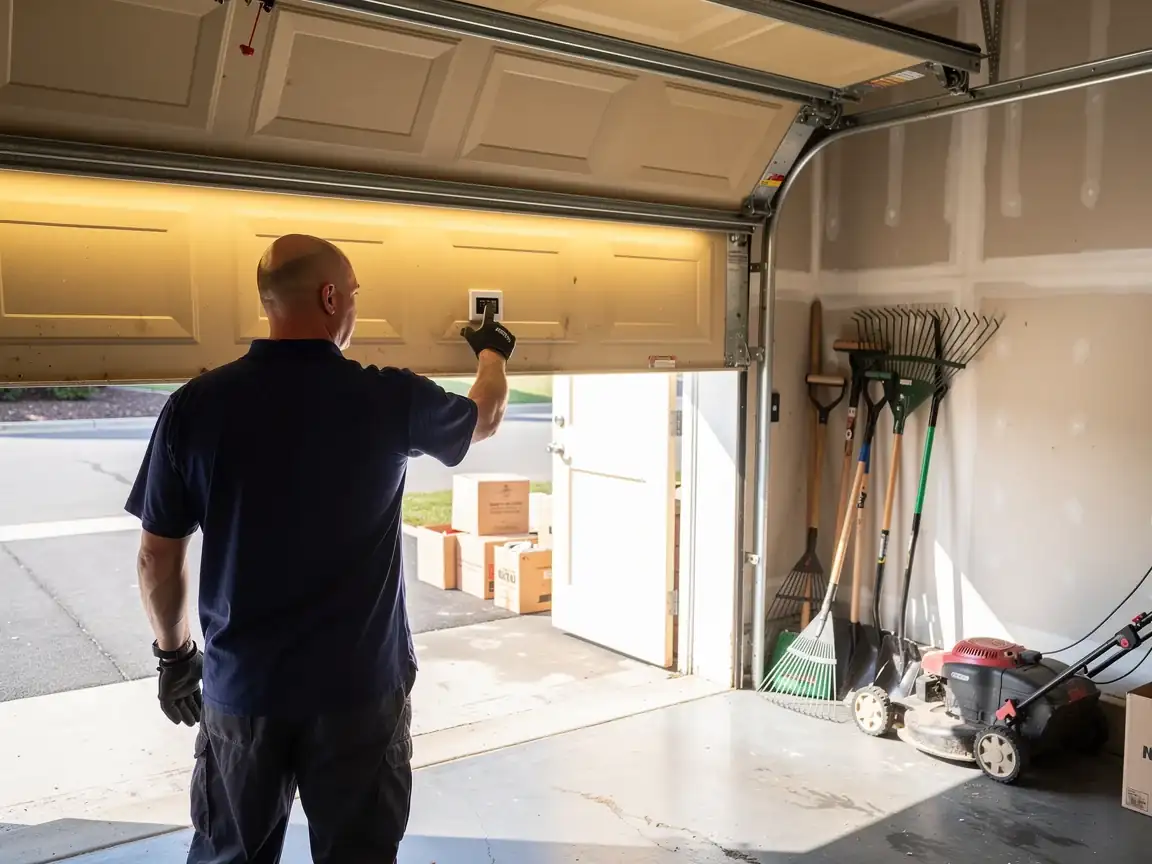
If the opener hums but the door doesn't move, that's usually a stripped gear, not a weak motor. If the light blinks and the door reverses before it closes, check the sensors first; a bumped or dirty sensor pair causes more false reversals than anything mechanical. If nothing happens at all - no hum, no light - that's often the capacitor or the board, and on an opener from the 1970s-era housing stock, age alone is a reasonable first guess before we've even opened the unit.
A remote that stopped working while the wall button still does points to the logic board's receiver, not the opener's motor, which is a smaller and cheaper fix.
What You Pay
Given the median income here, we lead every call with a number before we touch anything, not an estimate range that gets revised later. A capacitor or sensor realignment is on the low end. A logic board replacement is mid-range. A full opener swap only gets recommended when the repair cost starts closing in on what a new unit costs - which, on an older chain-drive unit, happens sooner than people expect.