How Long You Are Without the Door
Locust Grove is 19 miles out from our shop in Winchester, which matters more here than in the closer suburbs. We don't keep a branch or a second truck in Locust Grove, so when you call, you're booking a trip, not a drop-in. That's not a knock on the town - it's a small pocket, just 39 households by the last count - but it means we plan the run instead of swinging by between other jobs.
The houses themselves tell you what's likely wrong before we even load the truck. Most of Locust Grove went up around 1971, which puts the original garage doors and their hardware past the point where parts are a guessing game. A torsion spring from that era isn't rated the same as what ships today, and if nobody's touched it in fifty years, it's not a question of if it fails, it's when. We bring spring stock sized for that older torsion drum, not just the current standard.
Because we're driving in from Winchester, same-day isn't something we promise on the page - it depends on the day and what's already on the schedule. We'll tell you straight when we book the call.
What You Are Seeing
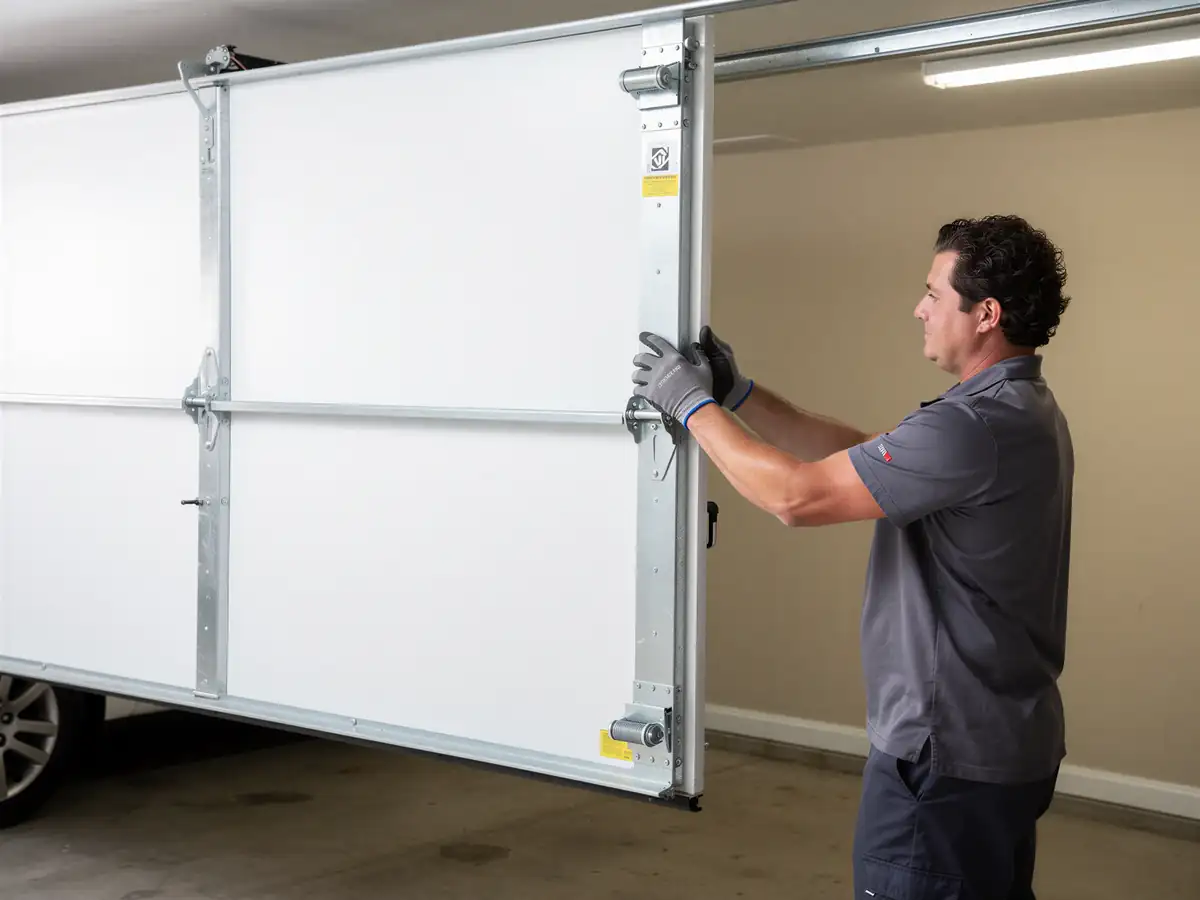
On a house built close to 1971, the complaint is usually one of three things: the door won't lift past a few inches and the opener strains against it, the door comes down off-track and jams halfway, or the whole thing is dead silent when you hit the remote. The first is almost always a spring that's lost tension or snapped outright. The second is a roller or cable that's worn through - common on original steel track that's never been swapped. The third can be the opener itself or something as simple as a sensor knocked out of alignment, but on a door this old, it's worth checking the hardware before you replace a working opener.
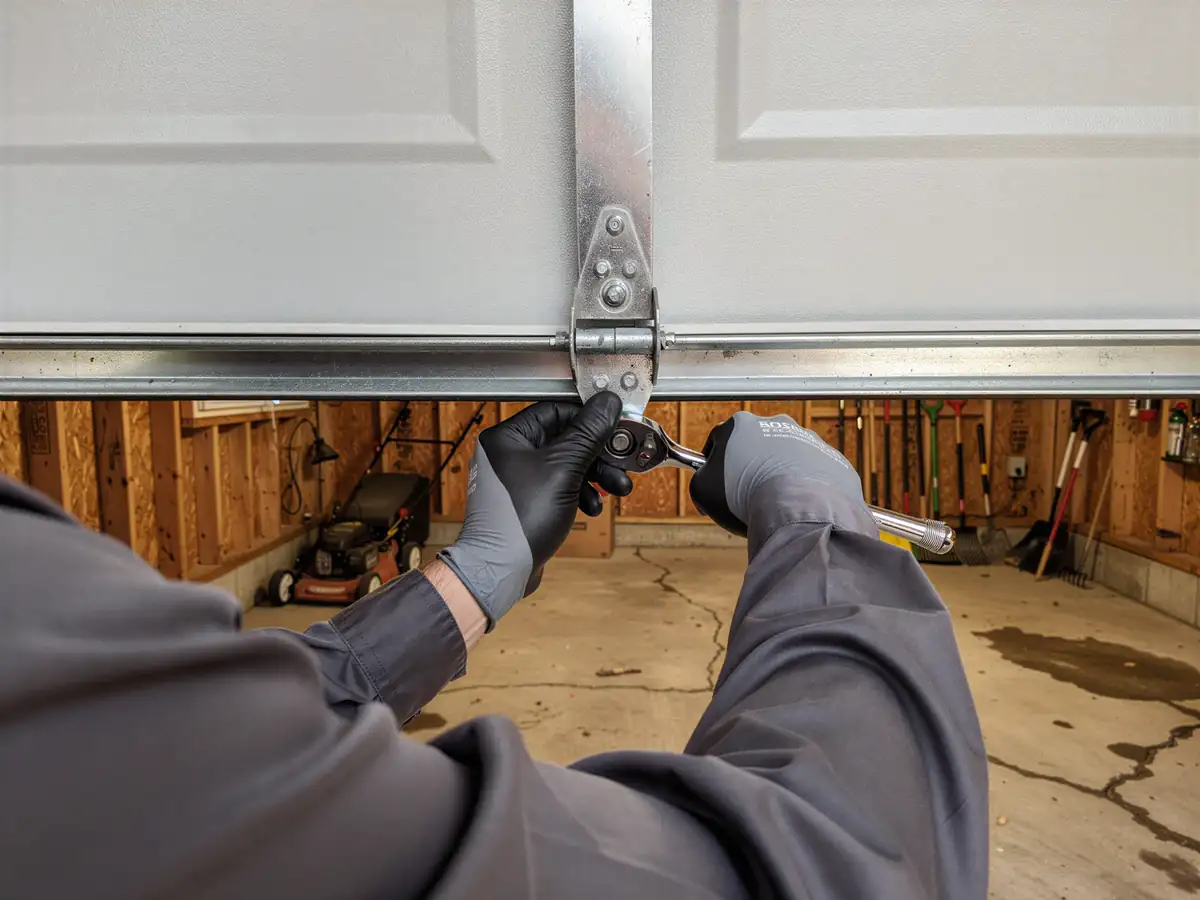
We also see a fair amount of rust and pitting on panels and track hinges out this way. The region sits in a cold-climate band with harsh winter swings, and galvanized coatings from the 1970s don't hold up to forty-plus years of freeze-thaw cycling the way modern finishes do. If your door groans loud in January and runs fine in July, that's the cold doing exactly what it does to old steel.
Booking a Visit
Tell us it's Locust Grove when you call
The distance changes how we schedule, not whether we come. We ask a few questions up front: age of the door if you know it, whether it's a single spring or two, and what the opener does or doesn't do when you press the button. That lets us load the right spring size and track hardware before we leave Winchester instead of diagnosing from scratch in your driveway.
Because this is a longer run than most of our stops, we batch Locust Grove visits where we can
If your repair isn't an emergency - a slow opener, a noisy roller, cosmetic rust - mention that when you call. We may be able to line it up with another job in the area and get you a tighter window. If the door's stuck shut or the spring's snapped with the car trapped inside, say so; that changes how we prioritize the day.
Stocked Parts
For a town built mostly in the early 1970s, the parts that matter are torsion springs sized to the older drum diameter, extension spring sets for the houses that never converted to torsion, and galvanized track sections to replace what's pitted through. We carry these on the truck because ordering them after we've already made the 19-mile drive wastes your afternoon and ours.
What we don't stock are discontinued panel sets for doors this old. If a single panel on a 1971 door is dented or rusted through, matching the exact profile and finish from that era usually isn't realistic - the manufacturer specs have changed too many times since. In that case we'll talk about a full door replacement rather than chasing a panel that doesn't exist anymore. That's not an upsell; it's just where the parts supply runs out.
What Can Go Wrong
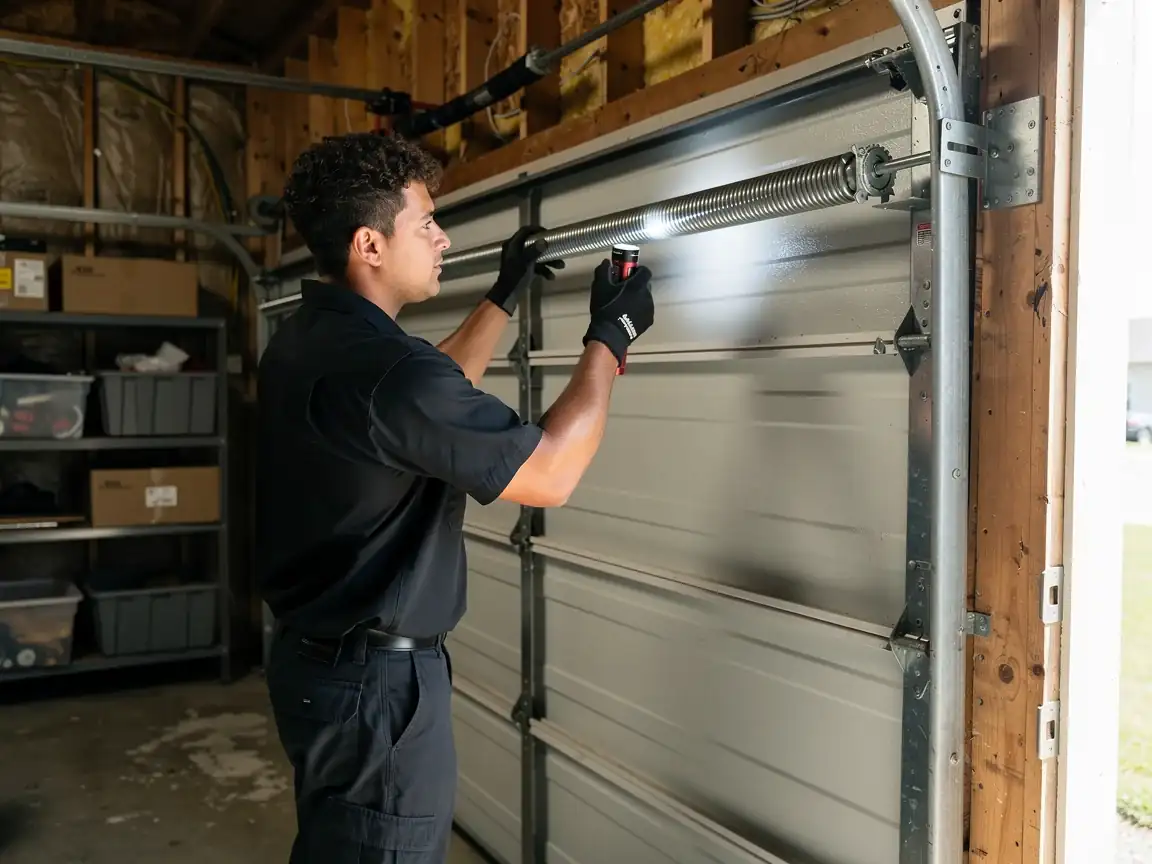
Original torsion springs from a house built around 1971 are the single biggest risk in Locust Grove. Steel fatigues with time and cycles, and a spring that's held on for fifty years can let go without warning - usually on a cold morning when the metal's already contracted and brittle. That's the call we take most seriously out this way.
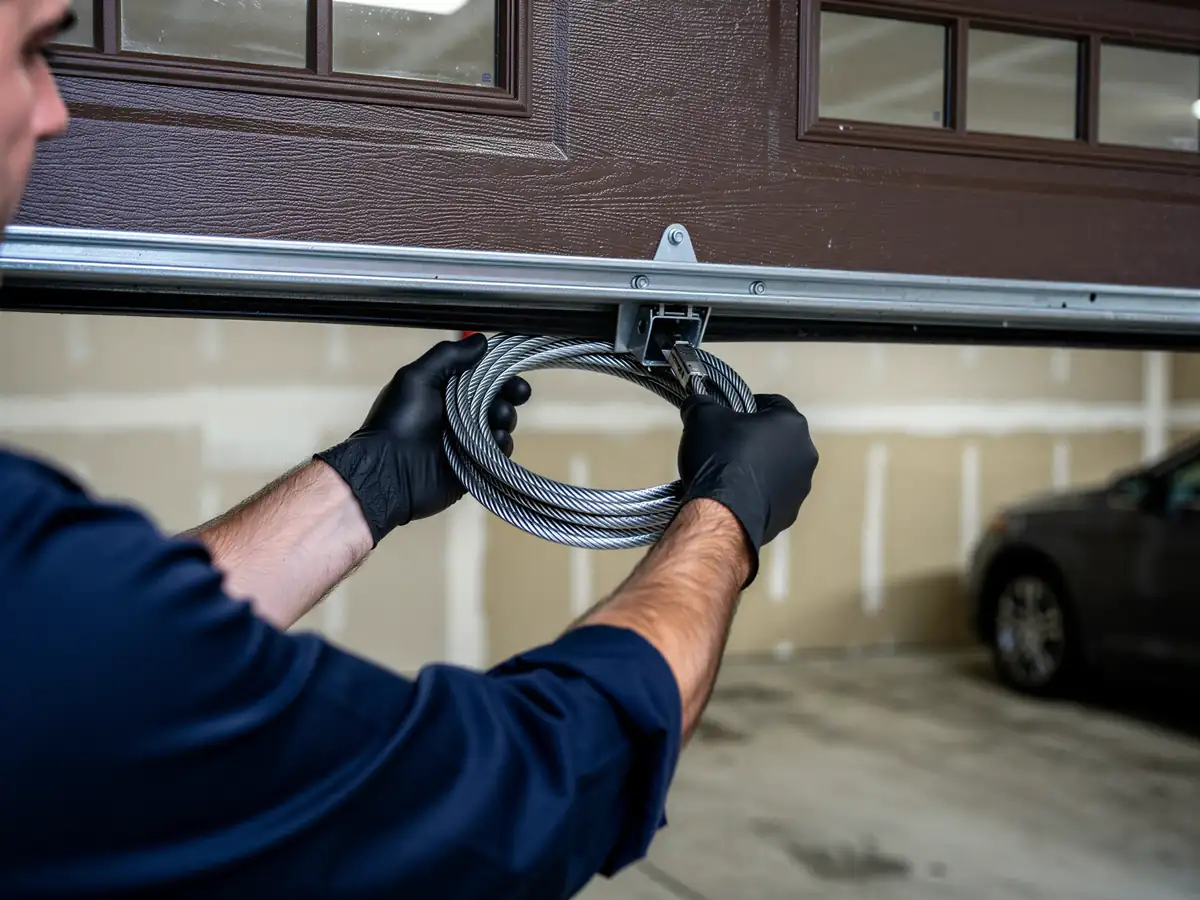
Second on the list is cable and roller wear on track that's never been upgraded. Original steel rollers without any sealed bearing wear a groove into galvanized track over decades, and the door starts binding at the same spot every time. Left alone, that binding eventually strips the opener's gear or cracks a panel at the roller bracket.
Third, and less dramatic but still a problem: openers from a later retrofit era sometimes outlive their own safety sensors. If your opener reverses randomly or won't close at all, check the sensor eyes near the floor before assuming the motor's dying.
The DIY Question
A spring on a door this old is not a DIY repair - we'll say that plainly
A wound torsion spring under tension can do real damage on release, and on hardware from 1971 you're also dealing with mounting brackets that may not match what a hardware-store spring kit assumes. That's the honest limit here: we'd rather you call than improvise.
What you can check yourself
The sensor eyes at the bottom of the track, whether the door is visibly off its rollers, and whether the noise is a grinding sound (usually hardware) or a clicking sound (usually the opener's gear). None of that fixes the problem, but it tells us what to bring when we make the drive out from Winchester, and it can save you a second trip.